A Perfect Day

Sometimes I have a day when everything comes together and I have to say, “Thank you, God, for allowing me to experience it.”

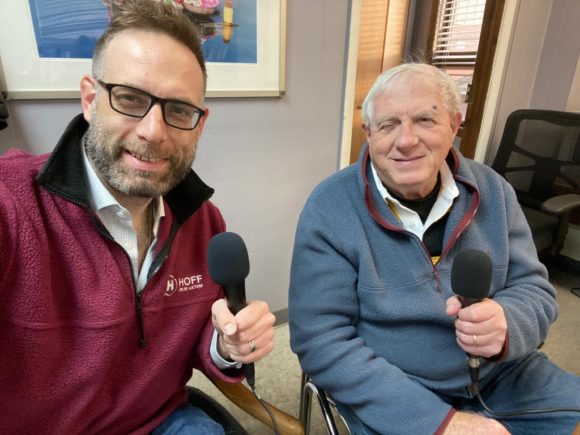
I had one on May 7th. Noah and I had an interview scheduled with Eitan Wertheimer, Chairman of the Board of Iscar, the huge Israeli cutting tool firm that he and his father Stef built. They just sold 80 percent of the company to Warren Buffet’s Berkshire Hathaway for $4 billion.

We got to the Standard Club in Chicago a half hour early, stepped into the elevator and Eitan introduced himself to us. He was ready to start the interview at 9:00 instead of 9:30, and we immediately began talking about Iscar, the sale to Buffet, his business career, love of cars, interest in education, the ups and downs of family business and a satchel full of other subjects.

Great chemistry. He wanted my take on business in North America, particularly the car industry and the woes of GM, Ford and the Tier Ones. I wanted to get his view of Israeli politics. He said that in business you can develop good people and work with them for a long time, but in politics you have no choice but deal with a bunch of difficult personalities.

He had advice for Noah about family business. The two of them seemed to hit it off immediately. Eitan’s oldest son is Noah’s age and is trying his hand at being an internet entrepreneur.

The interview lasted 75 minutes, and I felt like we could have talked for hours, but I knew that other people were waiting for a piece of his day in Chicago.

So we left the elegant, old Standard Club to prepare for our later interviews that day. Noah was preparing to talk to the twenty-something owners of Threadless, a custom tee-shirt company that is rewriting the business script of retail, and I was going to see the young entrepreneurs at Microlution, a machine tool startup on the Northwest Side of Chicago.

Microlution is making a CNC milling machine, smaller than a desktop computer. The next version of the tool will be adding a tool changer with the same kind of tiny footprint or, to be more precise, handprint. These young engineers worked on this stuff when they were students at the University of Illinois and are now translating it into what they hope will be a viable business. They are working on a big development contract from the Navy, they hope to sell four machines by the end of 2007 and 20 next year.

I think that they are doing something very cool. The current machine is potentially a design engineer’s best friend because the engineer could make prototypes literally at his desk by himself, skipping layers of bureaucracy and enormous tooling expense in a traditional big company setting. The engineer could make ten iterations of a component in a fraction of the time it would take to job it out or send it to a big company’s toolroom for prototyping.

I was impressed with their product, and I liked the way they think. I had a 5:00 p.m. reception for the American Israeli Chamber of Commerce back downtown, and I needed a ride. In a moment of inspiration I asked Andy Phillip, one of the brains at Microlution, if he would like to meet Eitan Wertheimer of Iscar. After a long moment of pondering his schedule, he said yes.

We stopped by his apartment in the city (he lives two blocks from Noah), so he could change into a suit and tie for the old school meet-and-greet for big shots at the Conrad Hilton on Michigan Avenue.

We walked into the reception (for the American/Israeli Chamber of Commerce) and saw Eitan Wertheimer surrounded by a gaggle of people. He immediately greeted me buoyantly and asked me if Noah was coming. I told him no, but I had another young guy named Andy Phillip that he had to meet. I briefly described the Microlution product, and then the two men started to talk shop. After 10 minutes they exchanged cards and promised to email. Then Eitan introduced Andy to several men from Pratt and Whitney, with whom he has a big joint venture making jet engine blades in Israel. One of the aircraft engine guys we met has 450 design engineers working under him.

I got a huge kick out of it. Will anything great come of the interviews and the matchmaking? It already has for me.

How little Spira Shoe Company stole the show from Nike

What do you do if you are an unknown pipsqueak company with a killer idea, going up against a giant with an almost unlimited marketing budget?

On April 16th at the biggest running event of the year, the Boston Marathon, tiny Spira Shoe Company of El Paso, Texas, stole the show from Nike.

For two thirds of the race, two unknown Kenyan runners led, wearing brilliant yellow Spira shoes. Spira shoes have a superior design to their competition aside from just their color. Tiny springs are put into the heel of the shoes. This idea is getting traction in the footwear community but has not been deemed kosher by the running mavens. The Spira guys did not expect to win the Marathon. They just wanted to be noticed. And for one hour 32 minutes of the two hour, 10 minute race, they were front and center.

Nike can buy every track star on the planet (the winner did wear the swoosh), but the talk of the race was these two wannabee Kenyans with the incredibly yellow shoes.

Spira had promised the Kenyan rabbits $150,000 if either won the race. If the runners had won the race they would have had to forfeit the marathon’s official prize because of the spring shoes, but Spira was pretty secure these unknown runners weren’t going to finish first.

Unknowns do not win the Boston Marathon, but this year one did – Spira

Daimler-Chrysler Wants a Divorce. Shocking.

We now have the news that Daimler-Chrysler wants a divorce. Shocking.

One more stupid merger falls apart because the people couldn’t get along. The Germans thought Detroit built crappy cars, and the Chrysler folk thought the Mercedes men dissed them. The hapless Dr. Z commercials were so discordant with American sensibilities even Beyoncé hood ornaments could not have saved the lines.

About the only way GM could buy Chrysler would be to trade its interest in Delphi for it. Marrying Ford and Chrysler would be a match between Alzheimer patients. Toyota needs Chrysler like it needs a UAW contract, and Carlos Ghosn now has a toothache at Renault.

Chrysler is as sick as a metropolitan newspaper, which means that there are buyers on Wall Street who smell blood and money, but not in Autoland. Kirk Kerkorian might resurface for a Chrysler redux, but at 90-years-old with his slots at MGM just spewing money, what does he need Chrysler’s misery for?

If Dieter Zietsche and his comrades are willing to take the hit, Chrysler will be sold to a hedge fund willing to stare down the UAW in the upcoming contract negotiations. This could mean a long strike like Goodyear recently weathered. I think Daimler has no stomach for this kind of war, so they will probably bail out quickly.

Some shrewd and gutsy people will step up for the minivan, Jeep and Dodge truck franchises. Chrysler is not a basket case yet, but the sooner the Daimler Dandies head back to Stuttgart the better.

Lovie and Tony's Coaching Styles

Tony Dungy, the coach of the Indianapolis Colts, and Lovie Smith, coach of the Chicago Bears, are close personal friends who talk to each other at 5:00 a.m. every Monday morning during the NFL regular season. They are also the this year’s two Super Bowl Coaches.

The parallels between the management styles of the first two black coaches to run teams in the BIG GAME are suggestive of important shifts in business management at this point in American history.

Dungy and Smith are both soft spoken, religious, Christian men. They deflect personal notoriety and celebrity and both continually praise their players in public. They both stress defense and defer to their coordinators and in Dungy’s case the star quarterback Peyton Manning. They play the Cover Two defense, which is a complicated hybrid of the Man to Man and Zone approach in the secondary to defend the pass.

These men have risen to the peak of their profession while the egotistical coaches of the Bill Parcells, Tom Coughlin, Dennis Green model have been unable to mold cohesive, confident, winning teams in recent years. In a league where 70 percent of the players are young and black with a lot of spending money and huge visibility, these strong fatherly quiet men have built accountability into their systems.

The NFL has a rigid salary cap and a sacrosanct draft which builds parity of personnel. This makes coaching and talent evaluation the great unleveler. The New England Patriots have defied the equalizing momentum each year because Bill Belichick, another self effacing coach, remolds a great team year after year. The coach is the great variable in pro football and deserves to be paid as much of more than the star players.

Games are won consistently in the NFL because one team buckles at a critical moment. The quarterback is the most important player, but many teams win with a mediocre quarterback, the Bears being a prominent example.

The Smith and Dungy coaching model; emphasizing defense, speed and accountability while reducing the visibility of the “Star Coach” can teach us a lot about successful leadership today.

Wiki-Screw Machines

Like most people, I have a love-hate relationship with the Internet. I love Fantasy Baseball. I hate email. I love reading Mark Cuban’s blog. I hate the assault of pornography and cyber theft.

One of the utterly fascinating developments on the Web is the Wikipedia; the free, open source, constantly changing receptacle of knowledge that almost every high school kid gleans for his research papers.

My son Noah alerted me to the entry on “Screw Machine,” a subject dear to my heart. I was amazed that there was such a heading.

I thought the discussion of the screw machine was decent, but hardly worthy of the lofty goals of the Wikipedia. I know that the readers of Today’s Machining World and swarfblog can improve the entry significantly. So I’m laying down the gauntlet to everybody out there to add your vast knowledge to the Wikipedia. Go right now to the entry and change it. Better yet, post your criticism and ideas for the article on this blog. If you are as pathetic as I am on manipulating your Dell or Apple, send a handwritten note to TMW and we will integrate it with the open source material currently online.

The Wikipedia is really a big deal. If we expect kids to go into machining, we need to give them some solid, basic information on the Web to intrigue them.

Go to the Wikipedia. Think of one small refinement, and either submit it yourself or send it to us. We will keep you informed about the changes on “Screw Machine” that we observe.

Commodity Prices Unraveling

Copper prices are down almost 30 percent from the speculative hedge fund bubble. Brass rod is just beginning to follow with scrap prices down about 10 percent from the peak.

We are in the midst of the unraveling of the commodity price squeeze which was more about avarice than scarcity. Oil is hovering around $52 a barrel for crude, which is attributed to a mild winter in the United States, but really, how many people are still burning heating oil. The reality is that the speculators who went long on petrol are on the run. If we don’t get a Shia A-bomb soon, the oil bulls will be deader than the A-Team.

For Ben Bernanke, the commodity route gives him time to plan his next move. Gasoline at $1.75 a gallon is like a tax cut or a half point rate cut for the economy. It may be enough to stabilize the housing market which is already showing a heartbeat. The stock market analysts say they look forward, but they usually are obsessed with the current quarter’s comparisons with last year. They will probably miss the likely bounce in construction. Global warming also allows builders to work virtually year-round now, all the way to Manitoba, which skews old comps.

Weak steel prices are likely to give the auto companies and their traumatized suppliers a little boost. When the metal supply gets sloshy, the dynamic shifts power to the buyers even with the reduction in primary producers.

The acceleration of stock prices in recent weeks despite the Democrats grabbing Congress, Iraq dragging on, and a lousy Wal-mart Christmas indicates that the financial mavens believe the U.S. will get the prayed-for soft landing.

Amen.

Meeting People the Old Fashion Way (Liberated from email!)

One of the great things about doing this magazine is finding out that people actually read it, and some even like it.

I received a call from Paul Ikasalo, the manufacturing manager at F.H. Peterson of Stoughton, Massachusetts. Paul liked my Swarf piece in November when I declared my self-exile from the email world. He called me at 708-535-2200 and on my cell phone (708-380-8530) to say hello and endorse my email boycott. He hates the sterility and pollution of web messaging. We had a hearty conversation for twenty minutes discussing the business approach at his sixty-person job shop near Boston. Peterson does short-run stuff. Medical apparatus is an important component of their business. They run old school toolroom equipment, but have invested in CNC Toshiba boring mills in recent years, which are now their core machining capability. Business is good. They have been able to hold on to their machinists over a long period of time because they pay well and listen.

I also had a great conversation with Scott Volk of MetalQuest in Hebron, Nebraska, near Lincoln. He wanted to talk about my “radical proposal” Afterthought column regarding enlistment of young people in the machining world. He is heavily involved in an outreach effort at a local high school and junior college to tell them about the cool opportunities available. He says there is an active group of grass roots communicators in Nebraska and Kansas who are quickly getting traction in recruiting students into a manufacturing track. Their approach has been to get to know career counselors and invite kids into their factories for show and tells. When kids see the fun stuff in today’s CNC shops, they bite. He says local junior colleges have filled their manufacturing-oriented classes to overflowing, because kids can see the payback.

Paul and Scott love the thrill of making things that are important. This is the story of manufacturing which has been so poorly told to the uninitiated french fry fryers of America. The new world of customized manufacturing, which is coming soon to a company or a war near you, is going to open up more opportunities, as making things when and where they are needed eliminates the advantage of off-shore manufacturing.

Can We Stop a Culture of Failure?

In the last few days, in New York and Chicago there have been killings of young African-American men by the police, inciting the black communities in those cities. Neither victim was a hardcore criminal. It is quite possible both young men were in the wrong place at the wrong time and were confronted by cops who were extremely scared.

It is a lousy time to be a young black man in America.

I write this from the vantage point of a well-off 61 year-old white guy who happens to live right next door to Black America. I get a pretty good view of it right over my fence in the Village of Olympia Fields, Illinois.

Olympia Fields is now a predominantly African American community. The elementary school adjacent to my house is made up of over 85 percent black students. The high school Rich Central, within walking distance of my house, is also over 85 percent black. The villagers’ homes (there are no apartments) range from $200,000 to $500,000, except for a few which have been gerrymandered into another school district that has less black students – those are more valuable on the market.

I see an interesting phenomenon now in Olympia Fields. Black people are moving out because they don’t want to send their children to the predominantly black schools of Olympia Fields.

One African-American friend of mine, who is looking for a new home now, told me he would not buy in my village because he doesn’t want to pay the “tax.” I asked him what the “tax” was, and he said the tax was the cost of sending his children to private school.

My longtime next door neighbor recently moved because she was afraid to send her daughter to Rich Central high school. She thought the crowd would be bad for her daughter’s development.

I look at the South Suburbs of Chicago where I live, and I conclude sadly that while life has gotten much better economically for many African-Americans over 30, it looks grim for the younger generation. The irony is that our next president may be Barock Obama and that the most influential person in the Bush Cabinet is Condoleezza Rice; and the heads of American Express, Time-Warner and Merrill-Lynch are black.  Ken Williams, general manager of the Chicago White Sox, and Tony Dungy, the coach of the Indianapolis Colts, are symbols of the triumph of my generation’s black American peers.

It is encouraging to read Juan Williams and John Ridley laud the black achievers and decry the culture of victimization that has overtaken a new generation of African-Americans, just when the parents of that generation are reaching middle and upper class America.

I do not know how it has happened, but a new generation of kids who do not believe they can compete in the educated world have taken over my local schools. Achievement in school is ostracized. Teachers are giving up. Marriage and two parent homes are fading away. White culture has seen a similar lean towards entropy, but from my vantage point, the swing backward by Black America is so sad and disappointing following the big gains of the baby boomer generation.

My hope is that the new prominence of the Juan Williams and Bill Cosby critique of the “Culture of Failure” in the book Enough will hit home. I’ll be watching over my back fence in black Olympia Fields Illinois.

Borat

I was in Charlotte, North Carolina the first weekend that Borat came out. My 26 year old son Noah and 20 year old nephew David invited me to see the film with them. Should a son allow his 61 year old father to see such a movie with him?

All of the controversy in the press has been about whether parents should take their impressionable teenagers to Borat. The bigger issue should be whether young people should take a reactionary old Republican fart to such a rowdy flick.

I walked away from Borat utterly shattered from laughter. I laughed harder than the young guys because the movie was not only a gas, it was crazy risky. Sasha Baron Cohen is a comedic savant and Larry Charles the director helps him shine. To do anti-Semitic skits to expose anti-Semitic attitudes like Borat does in its “Running of the Jew” segment is incredibly gutsy for a big budget movie.

Baron Cohen is innocently coarse and fabulously vulgar. I am so tired of comedians who go for cheap laughs by using “fuck” or describing penises. Borat Just goes for your balls in the funniest way I’ve ever seen on screen.

Parents if your kids want to go with you to see this movie, I don’t care how young they are – just go and have yourself a ball.

The DNA of Winning, Bill Parcells VS "Red" Auerbach

Michael Lewis, author of Moneyball, is my favorite writer on the planet. His piece on Bill Parcells of the Dallas Cowboys in the November issue of Play, the new sports magazine of the Sunday New York Times, is a masterpiece. Appearing the day after the death of “Red” Auerbach of the Boston Celtics, it is a picture of the totally driven joyless coach.

Lewis takes us into the daily anguish of Parcells as the coach looks for weaknesses in his opponents and in his own guys. Parcells is a boxing nut. In the off-season, his idea of a good time is to hang around cloroxed fight gyms. Parcells sees the world through the prism of boxing. He believes games are often won and lost because one team quits at a crucial tipping point. Parcells cherishes the clippings of a long forgotten fight thirty years ago between Vito Antuofermo and “Cyclone” Hart, which Lewis relates to us through Parcells.

Hart was the better fighter, and he knocked Antuofermo all over the ring for four rounds. But Antuofermo absorbed the punishment dealt out by Hart, his natural superior. He did it so well that Hart became discouraged. In the fifth round, Antuofermo sensed Hart’s discouragement and quickly attacked. Hart went down for the count.

Lewis recounts Parcells quoting his long saved yellowed article about the match: “When the fighters went back to their makeshift locker rooms, only a thin curtain was between them. Hart’s room was quiet, but on the other side he could hear Antuofermo’s corner-man talking about who would take the fighter to the hospital. Finally he heard Antuofermo say ‘Every time he hit me with that left hook to the body I was sure I was going to quit. After the second round, I thought if he hit me there again I’d quit. I thought the same thing after the fourth round. Then he didn’t hit me no more.’

At that moment, Hart began to weep. It was really soft at first. Then harder. He was crying for the first time because he understood that Antuofermo had felt the same way he had and worse. The only thing that separated the guy talking from the one crying was what they had done. The coward and the hero feel the same emotions,” quoted Bill Parcells to Michael Lewis. Parcells then ended with this comment, “This is the story of our last game. We are Cyclone Hart.”

Bill Parcells at this point in his career can still synthesize the DNA of winning. The portrait that Lewis paints of Parcells the man makes we wonder if a sour, sullen, totally driven coach can mold a group of players into winners who will absorb the punishment and then deliver the decisive blows.

As I read Michael Lewis’s piece I thought of “Red” Auerbach who knew how to savor a win. He would light a long chubby cigar on the bench when his team was comfortably ahead. It became his trademark and symbolized one of the greatest pro sports dynasties in the history of pro sports.

Auerbach loved his players. Bill Russell was his star and ultimately his protégé and successor as coach of the Celtics. Both loved to win, and they also loved to laugh and celebrate. Auerbach loved the players and remained involved with the Celtics for 50 years – until the day he died.

I finished the Parcells article wishing the old football coach could absorb some of the Auerbach aura. Bill Parcells has won in every job he’s had for forty years. Coaching is his life. It’s his everything, and he can’t allow himself even a smile, much less a cigar.