
Elena Kagan has impressive credentials to become a Supreme Court justice, but her nomination brings up some interesting questions about the composition of the court. If she is confirmed there’ll be three Jews and six Catholics on the High Court—no Protestants, Buddhists, Muslims or evangelical Christians.
Four of nine Justices will be from New York city if Kagan gets in, one from each borough except Staten Island.
With Kagan’s appointment all nine Justices will have gone to either Harvard or Yale Law School. There will then be three women on the High Court which would be a record number.
Kagan has written about the confirmation process, criticizing the charade of candidates for the bench who dance around their beliefs about crucial cases which the Court will hear. Now that she’s the one in the hot seat we will see if she’s as candid herself.
Ms. Kagan clerked for Abner Mikva who was one of Barack Obama’s early mentors. She was brought to Harvard by Larry Summers, who is head of Obama’s National Economic Council. She worked in Bill Clinton’s White House with Rahm Emanual. This woman has great connections.
The only drama I anticipate is that a senator will ask her about her sexual orientation. If Ms. Kagan is gay, as has been speculated, it may come up in testimony about cases of special interest to gays. Personally, I hope she addresses the whispers. I would like to see a gay woman on the Court—especially a Court that begs for diversity.
Question: Do you care about the sexual orientation of a Supreme Court Justice?
Elena Kagan, Supreme Court Nominee from http://www.dumbassgovernment.com/images/elena_kagan.jpg
The financial world views Greece as the hole in the Euroland dike. Riots in Athens sent the U.S. stock market down 1500 points because people feared it was the beginning of another subprime-like tsunami.
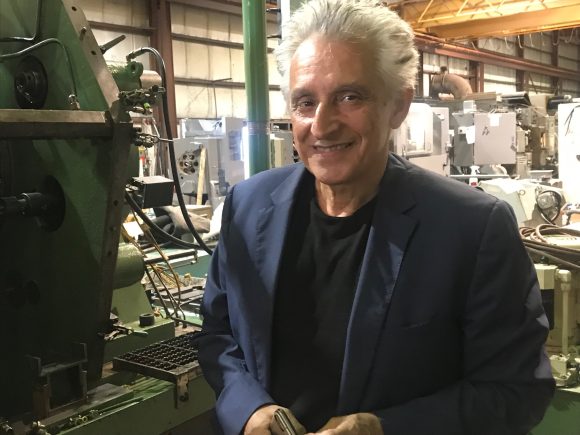
I didn’t have a good feel for Greece’s problems so I called Nick Logarakis, an old friend who had built and sold General Automotive Manufacturing in Milwaukee after emigrating to the United States from Greece following college at University of Wisconsin Madison. Nick is active in banking now and still has a hand in manufacturing through his son-in-law’s firm, Northern Gear in Franklin, Wisconsin. He maintains a home in Athens and imports Greek olive oil for fun. Nick understands Greece as a native, but has the perspective of an American businessman.
“What you’re seeing in Greece is the result of 30 years of Socialism,” he told me Friday. “Government workers get two weeks off for Easter, two weeks off for Christmas and four weeks off for summer. They get paid for two months not working,” according to Nick.
The orientation of the country is to make work. “I go in to pay a tax bill, and the clerk records the transaction on the computer, then he takes out a big ledger book and writes it down. It makes more work for the bureaucrats,” he said.
Coupled with the make-work is corruption. Companies work with two sets of books, one real and one for the tax collectors. The cash economy thrives while the country’s treasury starves
Nick says when he goes to a well-regarded doctor in Greece the expectation is that he pay 30 euros at the desk, but slip an envelope with 100 euros in cash to the doc when he’s alone.
Logarakis says in Greece you see a lot of people driving around in expensive cars, eating in restaurants and going out to clubs.
Government services cost more than the country can afford, the way they are presently being run. The European banks that hold Greek bonds are scared. Spain, Portugal, and Ireland, are in the same boat.
Now we have a new Euroland taxpayer bailout for Greece and its creditor. Take a deep breath and pass the Kalamata olive oil, please.
Question: Is the United States headed in the direction of a Greece-like debacle?
Here’s a little feel-good blog about a video I just saw on YouTube. As some of you know, the search for the next coach of the Chicago Bulls has begun. One of the guys on the shortlist is former 76ers point guard and Chicago native, Maurice Cheeks.
Along with being known as a great point guard and solid coach, Cheeks is known as just real good guy. Back in 2003, Cheeks was head coach of the Portland Trailblazers. During a pre-game, he came to the aid of a 13-year-old girl who forgot the words while singing the National Anthem, inspiring the entire stadium to join in to help. You need to check out this video on YouTube. It’ll make you proud to be an American.
A popular sports talk show in Chicago has a feature that exposes hypocrisy. They call it “Who you crapping?”
This crap goes out to Warren Buffett. After listening to Lloyd Blankfein, head of Goldman Sachs, tap dance in front of a Congressional inquiry about his company’s conduct during the subprime mortgage catastrophe, and reading Michael Lewis’s book, The Big Short, detailing the stupidity and duplicity of the ratings agencies, including the once venerated Moody’s during the same period, I was shocked to hear Saint Warren defend both at the annual Brookshire Hathaway pig roast in Omaha last Saturday.
But I suggest the real reason he defended them is that Buffett owns a big stake in both firms. Brookshire lent $10 billion to Goldman at 10 percent interest during the depths of the Wall Street chaos. He also has warrants to buy the company’s stock at $122 per share. He also owns 20 percent of Moody’s. He thinks Blankfein is great and wishes he could clone him. He also thinks Moody’s is a wonderful business.
These two pillars of Wall Street had a huge hand in virtually sinking the entire American economy. The SEC finally had the gall to challenge Goldman on a small deal and you would think capitalism as we know it is under siege. Thanks Warren, Oracle of Omaha, who you crapping?
Call it the frap flap but Starbucks is pulling the New Coke.
Evidently the Buck is feeling the pain from McDonald’s competitive and cheaper McCafé, in tampering with one of its most successful products, the beloved Frappuccino. My wife Risa was addicted to the mocha, light, double blended Grande Frappuccino with easy whip. Along with the shortbread cookie it was the break in her rigorous workday that usually goes to 8 p.m. (The shortbread replaced her former staple, the Rice Krispy Treat, after Starbucks ruined that by taking out the Trans Fats a few years back). The baristas at our local Starbucks all knew her order and started making it when they saw her approaching the store. If I came in they asked me if I was there for the Missus.
And now they’ve ruined it. According to Risa the new process using pumps is so inconsistent they’ve lost her recipe and cannot seem to recover it. From store to store the variance is enormous. I would compare this to McDonald’s using different hamburger grinds and ketchup at each store.
Fast food depends on consistency. White Castle makes the slider the same way everywhere, and Wendy’s chili is always reliable. A Frappuccino is not a Domino’s Pizza, which was so uniformly awful everywhere that it begged for a redo.
Risa is appalled. She’s furious. It is a topic of conversation daily. She feels like she’s been robbed of something dear to her without warning. She says she beat the New Coke debacle by buying cases of old Coke ahead of time. But there is no old Frappuccino to be had.
Starbucks you were stupid. Let’s see how long it takes before you realize it.
Question: If you were Starbucks CEO Howard Schultz what would you do to compete with McDonald’s?
In today’s difficult economy, we are all trying to make parts faster and cheaper. Unfortunately, making parts faster is sometimes at odds with making them cheaper.
I have learned from experience that sometimes a machine will consume less money if you slow it down a little and try to find the proverbial “sweet spot.” The fastest spindle speeds and the highest feed rates may not be the best way to run the machine. It may be difficult to convince your boss that this is true, but having real data to prove it can be helpful.
Tooling costs or machine repair costs are examples of costs that could go up significantly if the machine is pushed too hard when trying to reduce cycle time. When I get involved in a process, I like to track tool life. If I don’t know what my tool life was before I make a change, I can’t accurately measure the performance gains or losses caused by the change. I always share my tool log results with the machine operator, as part of his or her involvement in the process improvement.
The following is a good example of slowing a machine down to get better performance. The part was made on an Index ABC lathe. This machine was plunge-roughing the OD of a cylindrical part made of 8620 steel, using a .3” wide carbide insert-type OD roughing tool. The tool had problems with durability. The average tool life for this tool was little more than 200 hits per edge. When the edge went bad, it happened quickly and would cause problems for the finishing tool that followed it. This roughing tool is one of 11 tools used to make this part on this machine.
The first thing I checked was feeds & speeds. The actual surface speed for the roughing tool was 1100 ft/min, while the recommended surface speed range, per the insert manufacture’s catalog, was 250 to 600ft/min. After reducing the spindle speed by 50 percent to obtain a more suitable surface speed, I steadily increased the plunge feed rate to a value 60 percent higher than it was. After these adjustments the chips curled up tightly, with a nice sizzle when they came off.
The net effect of my changes on the cycle time was an increase in cycle time of less than 1 percent. I was lucky that I was nearly able to completely compensate for the decrease in surface speed by increasing the feed rate.
The tool life results went from little more than 200 hits per edge, to more than 1200 hits per edge. This resulted in a $330 reduction in tooling costs per month. Additionally, we reduced tool change time by 15 minutes per week.
This was a time where a slower cycle time actually enabled me to make similar quantities of parts per month and reduce tool usage costs. If someone forgot their machining 101 lessons, there may be room for improvement.
Brian Capece has a five person shop in rural Maryland. He does wire EDM and precision machining for aerospace, satellite, medical and commercial clients, often working 65 to 70 hours a week. His wife runs his office now that his two children are in school. He’s been doing this for 10 years, since buying his first die sinker at an auction.
It’s been a rough year for Brian. He says he used up his cushion of money to keep the business afloat while not letting any of his people go, because those core employees are the key to his business and if he lost them he would be in the soup.
He is finally back in the black but wonders if the path he has taken for the last decade was the right one.
“After going to the tax man this year and seeing how much I had to pay, I really think I would have been better off working for somebody else than having my own business,” he told me.
His comment was not said out of anger or great regret, but I wonder how many people feel the same way—for the same money and less risk, they’d just as soon pull down a paycheck than sign all the checks.
Question: Do you think you would be happier owning your own company or being a well compensated, valued employee?
New research is showing that lucky charms may actually improve a person’s performance when doing certain activities. A recent article in the Wall Street Journal reported on a study conducted by the University of Cologne in which participants on a putting green were told they were playing with a “lucky ball.” The people using the “lucky balls” sank 6.4 putts out of 10, nearly two more putts, on average, than those who weren’t told the ball was lucky—a 35 percent improvement.
However, this phenomenon only applies to instances in which a person actually has some control over the situation. Various studies show that believing in luck while doing activities in which most if not all the variables taking place occur independently of what a person intends to do can actually have a detrimental effect on success because choices are being made by a person with a false sense of control. Gamblers and stock traders who base their decisions on superstitious ideas have been shown to be less successful than those who don’t use lucky charms because the superstitious ones act more recklessly.
So what does this all mean? How can a person use this to their advantage in business? It means that a person has to be able to identify the variables of a situation before they decide whether their lucky charm is more likely to lead to a positive outcome or an outcome where overconfidence blows up in their face. If one is going to negotiate with a customer and comes in with a confidence in their own abilities, magnified by superstition, assuming the person does actually have legitimate abilities or talent, luck may enhance their odds of success. At the same time, a person can’t forget, that when the decisions of another person (such as their adversary) or pure chance dictates a situation, they shouldn’t have too much faith in their rabbit’s foot.
Question: Do you feel lucky charms or superstitions have helped you be successful in the past?
Have you ever wondered how a movie gets made? This is the inside scoop on that process, right now.
Mary Ethridge has written several pieces for Today’s Machining World, including the cover story “Who’s Eating off Mary’s Plate?” about the history of the metal plate in her wrist. She lives in Akron, Ohio, and keeps up with the local scene. So when the Soap Box Derby ran into financial difficulty because the big local sponsor, Levi Strauss, walked away, Mary saw a story worth writing and pitched it to USA Today.
USA Today staff reporter Bruce Horovitz wrote the story, and the day after it appeared Corbin Bernsen, the actor famous for his portrayal of Arnie Becker on LA Law in the 1980s, called her up to say he loved the piece and wanted to do a movie about the Derby. Mary and Corbin hit it off immediately and he set off to develop a script and obtain financing. Bernsen understood Hollywood’s ways well. He envisioned a small budget Hallmark movie on a $750,000 budget. He wanted it to be shot in Akron and California, not Thailand or Slovenia, which he was afraid would happen if the Hollywood types put up the dough. Through Mary Bernsen got connected with local Akron money and raised the funds with the understanding that the film would be shot locally.
As the movie, 25 Hill,started to take shape new sponsors started to appear, even FirstMerit chipped in with $50,000. Geico, which saw the movie as a good product placement opportunity, became the prominent sponsor in the movie and stepped up big for the real Soapbox Derby.
The final shooting will be in July at the actual event in Akron. Mary Ethridge has been in daily contact with Corbin Bernsen since the article appeared in print and has acted as his eyes and ears in the Tire City. The Wall Street Journal ran a front-page feature on Wednesday about the movie.
It might make it to the theaters, yet.
Soap Box Derby car from Bernal Heights Hill Soapbox Derby 2007
The presentation seemed well received by our good sized audience, and at the end we fielded some questions. Someone in charge of marketing at a company attending the conference asked us, “How do I justify to my boss the ROI on having a blog?” We all responded by saying that your ROI from a blog isn’t easily quantifiable, yet that doesn’t mean it can’t be a powerful tool for self-promotion.
Seth Godin’s blog April 27th summed it up in an astute way. Godin says that ROI from having a Blog or Forum is like “Santa Math.” It’s not a normal investment like paying for a college degree that could lead to a high paying career.
You have to do a blog because you genuinely want to give to a community of people. Having a great blog or publication takes dedication, care and heart. Those efforts have to be genuine in order to create something that people love and value. This he compares to the way Santa Claus operates. Santa flies everywhere, giving presents and good cheer to people and doesn’t ask anything in return. Doing this he earns trust, friendship and gratitude. Maybe one day he can license his image and make a chunk of change to feed the reindeer and elves. But Santa wouldn’t be the loved icon he is if he was expecting money in return for giving presents to kids and brightening people’s lives.