New Huff Carbide Web Site

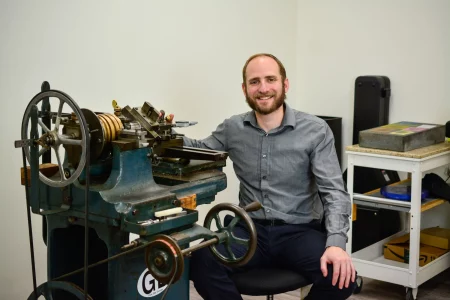
PORT RICHEY, FL 10 June 2010 — Huff Carbide Tool announces the posting of their new, totally revised and updated web site www.huffcarbide.com. The site stresses their dedication to producing the finest CUSTOM SPECIAL CARBIDE cutting tools available today. The tools are manufactured to their customer’s unique specifications, in any quantity required. This includes new tooling, prototyping and tool design enhancement.

The web site features fully functioning online custom tool ordering and quoting, resharpening and reconditioning forms, as well as custom tool templates, speeds and feeds and surface feet conversion information. It is an excellent tool for designers, engineers and purchasing agents, enhancing their ability to communicate tool specifications with Huff Carbide Tool.

Huff Carbide also offers complete TOOL RECONDITIONING and RESHARPENING service, designed to extend tool life and save money. Also offered is a full line of STANDARD cutting tools including a special MODIFICATION service for providing those little tweaks to meet special needs. Carbide blanks, dental burs, coolant fed tooling, coatings application, brazed tools and form tools are also available.

Huff Carbide was established in 1961 in Detroit, Michigan by Mr. Earl Huff, Sr., and in 2011 celebrates its’ 50 year anniversary. It has sales representatives throughout the United States and the International market as well. Meeting the tooling requirements of a wide range of users: medical; aerospace; electronics; plastics and novelty manufacturing industries, is the company’s prime objective.

New Huff Carbide Web Site

African Lean: Pioneering Precision Machining in Ghana, Africa

By Emily Aniakou

In 2007-08 I spent a year in Benin, West Africa, as a volunteer with the U.S. Peace Corps. Although Africa is easy to write off as a hopeless mess, there’s an important culture and movement toward economic change fueled by locals and West African nationals living abroad that is not visible in the calamity-focused news.

Michael Frank, the COO and founder of HUFRA, a precision machining company in Accra, Ghana, in West Africa, is one of those people. He has made it his mission to bring precision machining technology to his homeland by establishing one of the first CNC job shops in West Africa. Frank finished his Masters degree in manufacturing engineering in Russia and worked for 10 years in Britain. He now splits his time between his family in the UK and his homeland of Ghana, trying to get his fledgling business up and running.

Read the full story

The Hufra Precision Machining Company located in Accra, Ghana, West Africa. Photos courtesy Michael Frank

The Hufra Precision Machining Company located in Accra, Ghana, West Africa. Photos courtesy Michael Frank

Afterthought: Keeping it Simple

By Lloyd Graff

Today’s Machining World Archive May 2008 Volume 4 Issue 05

Greg Maddux is one of the greatest pitchers of all time, nearing 350 wins in the Major Leagues. He is a master of pitching in almost every sense, which enables him to still win consistently with a fastball that can’t break a window pane.

When Maddux was asked recently about his pitching performance on a particular night he answered very succinctly – “50 out of 73.” It was the number of pitches executed perfectly, not the score, his arm, or his mood.

I was stunned by his simplicity. Though Maddux is renowned for his sophisticated knowledge of the game, his acumen in setting up hitters, and his Gold Glove fielding prowess, it is his ability to not think and just execute that marks his remarkable career.

I am reminded of Tom Hanks’ portrayal of Forest Gump. For Forest, life was “like a box of chocolates.” He made up for lack of worldly intelligence with a purity of purpose and good humor.

I have observed through the years that success in business often goes to those who can see through the temptations of tricks and guile and just do the simple tasks they can understand. The most recent Wall Street debacle over mortgage instruments is a direct result of building a web of complexity that obscured the safe and simple. The derivative market was so complicated and opaque nobody could really evaluate the risky slices of potential insolvency, but the big players hoped they could buy their home in the Hamptons before the music stopped on their financial musical chairs charade.

Lean manufacturing is a noble effort to pare the tough skin off the perfect mango of proper production management. Nucor Steel was one of the earliest practitioners of simplifying the steelmaking process by using electric furnaces and scrap steel. They demolished the antiquated

Bethlehems, and Jones and Laughlins who needed the constant ore boats resupplying the United Steel workers on the featherbedded floor.

I write this piece from the vantage point of a used machinery dealer who has lived off opaque markets and challenging intrigue. Sometimes complexity is fun if you think you have the teachers’ copy of the workbook with the  answers in the back. But the periods of time when I’ve been the most successful and the happiest are when I refined the game down to its essence. “Listen to the customers. Meet their needs. Make a fair profit.” Business is hard, but it isn’t that hard when you keep it simple.

In my personal life I have learned, at times painfully, that clarity makes life so much easier. If a relationship is not working, state the obvious because to the other party it may not  be so obvious.

Greg Maddux. Simply the best. 50 out of 73.

Greg Maddux (Photo from The Higlight Reel)

Governed by the Rich

By Lloyd Graff

Meg Whitman, former eBay CEO, won the Republican primary for governor in resounding fashion on Tuesday. The same day, Rod Blagojevich, former governor of Illinois, watched while his lawyers grilled jurors in his corruption trial.

Blogo’s father ran a numbers game in Chicago. Young Rod grew up in a world of payoffs and married the daughter of a rough local Democratic politician on his way up the political ladder.

Whitman used $71 million of her own dot-com fortune to pave her campaign, while Rod Blagojevich shook down the paving contractors to get his political seed money.

Is Whitman more pure than the driven snow because she was recruited by venture capitalists to run the fledgling eBay after the founder realized he didn’t want to run the business?

Do we prefer the Rockefellers, Heinzes and Whitmans, and maybe celebrities like Arnold and Ronald Reagan, to run our country because the earthy the Rod Blagojeviches are too untrustworthy? Do we only want the elite who go to Harvard and Yale Law on the Supreme Court, which we now will have?

Maybe we want a House of Lords because the raunchy Rods and the slick Willies get too dirtied up climbing to the top.

Question: Do you prefer to be governed by the rich?

Rod Blagojevich and Meg Whitman (Photo from San Francisco Sentinel and Fox News)

One on One: Dany Romach

Interview by Noah Graff

Today’s Machining World Archive February 2009 Volume 5 Issue 02

Dany Romach

Dany Romach


Israeli machinery dealer Dany Romach, originally from Argentina, has been buying and selling machine tools worldwide for 43 years. He has watched Israel’s economy transform from primarily agriculture and military to high-tech.

How did you get started as a machinery dealer?
DR: I was a teacher at a technical high school. One time we didn’t have the budget to buy a machine, but I [heard] a rumor that machines were being sold from the military industry. So I went and saw them, and on a budget for one milling machine we bought six. From there the business began. I left teaching and I started rebuilding machines.

How is business in Israel right now?
DR: I would say that it’s strong. Don’t forget that we have many factories in Israel — HP and Boeing, and many factories of household goods supplying to Wal-Mart and others in the U.S. The big advantage we have in Israel is that it’s one of the only countries in the world, like Finland or Denmark, in which the banks are very strong. There is no fiddling around with mortgages, and we have a very strong person controlling the money — Stanley Fischer. So in finance, it’s okay. It’s not okay because there is a clamp down of the stock exchange, but people believe the economy is slightly stronger [here] than in other countries.

What is the typical salary of a machinist in Israel?
DR: I would say today that if you’re a good CNC person and know how to render and [solve] problems — and you are working one or two shifts — you could end up with a $3,500 a month salary. For the simple people, who just keep the machine without programming, it’s less. It’s a good living in Israel. You can buy a house and pay a mortgage. It’s about double the average salary in the market.

Is it hard to find good CNC people in Israel?
DR: The problem is that the educational system decided about 10 years ago to shut down the technical schools that taught how to turn, mill and measure. Everybody went running for the high-tech. Now they are reopening those technical schools because they are the basis not only for industry but also for maintenance in the army and aviation, which influence all of the market.

Are there labor unions in Israel?
DR: There are. Not a lot in manufacturing, but in the ports, electric and water supply — in all the things which can strangle the country. There are no strong unions in the metal industry because there is no car manufacturing. There is no one production that keeps a big percentage of the population working — it’s thousands of small factories.

Do you think in five years there will be an official Palestinian state?
DR: No, because I truly believe that the Palestinians themselves have a problem. They are like a shot blasting machine. A shot blasting machine is a machine that is also called a “self-destructive machine.” They have too much terror in the blood. They will have some kind of autonomy, but not a state.

What would it take for them to get a state?
DR: This is very difficult question — I cannot answer this on the phone. But I will tell you one thing. [I think that] in all of the West Bank, with 2 million people, there is not even one good, modern CNC 4- or 5-axis machine. They do not know how to operate them. They don’t have the skills. They have nothing. Even in Saudi Arabia and Egypt the people who handle the machines are Indians and Pakistanis. The Arabs do not have the ability and the skills to operate CNC machines.

Thanks, Dany.

Fuzzy2™ Oil Skimmer Material Exceeds Expectations for Gulf Oil Spill Clean-up

CLEVELAND, Ohio — June 10, 2010Abanaki Corporation reports that its patent-pending Fuzzy2™ oil skimmer material has been at work on the oil spill in the Gulf of Mexico for 38 days and is exceeding expectations by recovering  up to 385 gallons of oil per minute from the water’s surface, more than three times the capacity of ordinary skimmer material.

Abanaki’s Fuzzy2 material is attached to the surface of 30-inch diameter skimming disks on a floating skimmer made by CRUCIAL Inc. of Gretna, Louisiana.   CRUCIAL has tested the material in front of oil clean-up experts, and the company expects to see an increase in orders for its disk skimmer equipment.

A disk skimmer uses a rotating disk to remove oil from water. Oleophilic (oil attracting) material collects oil as the disk passes through the water, and wiper blades scrape off the oil for collection. Unlike other skimmer disk materials, Fuzzy2 has a hairy surface that greatly increases its surface area, making it more effective at removing oil floating on the surface of the gulf.  According to Tom Hobson President of Abanaki  “The beauty of the Fuzzy2 is that it can be retrofitted to virtually any brand of drum or disk type skimmer out there, making it possible for existing skimmers to triple their pickup rate”.

A mile below the water surface, the Deepwater Horizon oil well has spewed oil following an explosion. The spill has exceeded the Exxon Valdez as the worst spill in U.S. history.

For more information and to see a video demonstration, visit www.abanaki.com/116.

About Abanaki Corporation: Abanaki, the world leader in oil skimmer products, manufactures a wide range of products to remove oils, greases, solvents, and related hydrocarbons from water. Belt and Tube skimmer models are available with removal rates ranging from 1 to 200 gallons per hour in both stationary and portable systems. Headquartered in Cleveland, Ohio, Abanaki has served a global customer base in industries as diverse as iron and steel, wastewater, paper, food processing, automotive, environmental remediation and recycling for more than 40 years. Today, under the corporate motto “Clean Our World TM,” Abanaki continues to address pollution in industry through innovation, customer commitment, and environmental stewardship within its own operations.

FuzzyBelt

FuzzyBelt

Interview with Cell Phone Guru, Scott Goldman

Interview by: Noah Graff

Cell Phone Guru, Scott Goldman

Scott Goldman, also nicknamed “The Wireless Wizard,” is one of the world’s foremost authorities on cell phones. For the last 25 years he’s been an author, consultant, speaker, entrepreneur, and trainer in the field of wireless communications. You can read his blog atwww.thewirelesswizard.com.

NG:  How do you rate cell phone carriers?
SG: They all have their advantages and disadvantages. The most important aspect of any carrier for someone considering purchasing a cell phone or switching a cell phone to another carrier is whether or not the coverage is adequate at your home and office. If it’s not, no amount of choice in hardware, no reduction in cost, and no other tweaks to the capabilities of the phone will make it worthwhile.

NG:  How are the sizes of cell phones changing?
SG: At this point, phones have already reached the minimum size that they can reach from an ergonomic standpoint. The possibility of phones getting smaller from a mechanical standpoint always exists. There are ways to make keypads smaller; there are ways to make screens smaller. You might be able to eliminate screens and so forth. The major factor in the size of the phone today is not the keypad, the screen, the casing. The major factor is the battery size.

Read full interview here >>

Sandvik Coromant Releases 2010 CoroKey Cutting Tool Guide

Sandvik Coromant has released the 2010 version of its popular CoroKey guide, which helps manufacturers quickly and easily identify the first choice tool combination and appropriate cutting data for specific applications. The 216-page guide details applications and cutting tool solutions in a variety of areas, including turning, milling and drilling. It also offers practical tips and information on modular tooling and insert grades.

Updated to include some of Sandvik Coromant’s latest cutting tool innovations, the CoroKey guide is designed for production engineers, machine tool operators and anyone else who needs to quickly identify tooling and cutting data solutions. The guide now includes information on calculating important figures, such as metal removal rates for common machining operations. It also features frequently used cutting data formulas with illustrations and definitions of terms used.

The latest CoroKey guide has been updated to also include some of Sandvik Coromant’s MCT (Metal Cutting Technology) training materials, to help boost shop productivity. The guide’s design has been revamped as well, integrating a colored thumb index to make it easier to locate specific topics

Each section of the CoroKey guide begins with an overview on selection of inserts, grades and tooling for a specific type of application. This is followed by guidance on modular tooling, tool safety, maintenance and wear and troubleshooting.

The new CoroKey guide can be downloaded from the Online Catalogs page of Sandvik Coromant’s website, www.sandvik.coromant.com/us.

CUS CoroKey 2010

CUS CoroKey 2010

SRAM’s Up Hill Climb: Racing to the top of the bike world

By Scott Livingston

Today’s Machining World Archive June 2008 Volume 4 Issue 06

Red is SRAM’s top of the line component group-set for road bikes.

Red is SRAM’s top of the line component group-set for road bikes.

The French Alps are a long way from Chicago, Ill., especially when a bicycle is your chosen mode of transport. In July, the Alps are home to the Tour de France, the world’s most prestigious multi-day bicycle race. Year round, Chicago is home to SRAM Corporation, one of the most successful bicycle component manufacturers in the world. The pro riders who compete on the Tour are the ultimate test riders for SRAM’s high end road cycling components, but it is the average enthusiastic recreational cyclist that has helped drive SRAM’s amazing growth.

SRAM has progressed tremendously from its launch in 1987 to its present day status as one of the big three bicycle component manufacturers. The company has grown through both traditional internal product development and acquisition, establishing itself as a major player in the mountain bike, road bike, and comfort bike markets. The February 29 issue of BusinessWeek Chicago reported that privately held SRAM grew 15-20 percent in each of the last five years and had 2007 fiscal year revenues of $318 million. Publicly-owned Shimano, Inc. of Japan, the market share leader, had bicycle segment revenues in 2007 of more than $1.5 billion and total revenues of more than $2 billion. Shimano’s other industry leading business is fishing products, including reels, rods, and jigging.

Whether the products are bicycle parts or fishing gear, Shimano is a formidable competitor and SRAM has had to climb to gain its share in a challenging market. The third major player in bicycle components is Campagnolo S.r.l., an Italian based company. While SRAM and Shimano build parts for all segments of the market, Campagnolo focuses on the enthusiast road bike segment. Shimano is well known for its history of technical innovation, and Campagnolo, though also known for some technical innovation, is more known for their European style and design. Seemingly, SRAM has been able to meld the two together. Their strong position in the mountain bike segment has fueled its leap to the high end road bike segment. Campagnolo used to have a lock on supplying the top European based pro teams, but first Shimano, and now SRAM have made inroads by supplying parts to top teams at the high visibility professional level.

Lennard Zinn is a bicycle frame builder, technical writer for Velo News, and author of numerous books on bicycles and bicycle maintenance. He has been following SRAM since its founding and says that their growth is very impressive. “If it weren’t for SRAM, the whole industry would have ceded the mountain bike business to Shimano and the road bike business to Shimano and Campagnolo,” said Zinn. He is amazed at the amount of capital that SRAM has pumped into its acquisitions and noted that the inorganic growth has not slowed down its internal product development. Zinn fully expects SRAM to continue its growth.

Pedaling for Growth
How did SRAM move from scrappy upstart to a major player in a market that has changed dramatically in the past 20 years? During the entire history of the bicycle, U.S.-based companies have made big contributions. As the mass market for bicycles commoditized, U.S. companies lost their grip and domestic manufacturing migrated to the niche bicycle frame building business and small segments of the market where innovation was still thriving. U.S. manufacturers have led in the development of new materials and technologies like suspension and lightweight composite wheels, but until SRAM’s growth kicked in, there wasn’t a dominant U.S. player focused on large scale component manufacturing. Many of the large U.S.-based companies producing complete bicycles, such as Specialized, Trek, Cannondale, Schwinn, and GT have shifted from in-house manufacturing to a design, market, outsource model of brand development.

Some still operate U.S. factories, but there has been a fair amount of consolidation and most of the sourcing is done offshore, primarily in Taiwan and more recently in
China.

SRAM started out as many companies do, with a single product idea in the mind of an entrepreneur. Stan Day, Jr. founded SRAM with his brother and three friends. The name SRAM is derived from the first and middle initials of some of the founders. Day’s first design was the GripShift, a handlebar mounted derailleur shifter. The technology for that shifter is still present in their current line of twist shifters. SRAM has grown to be one of the largest component companies that still has internal manufacturing, most of which is offshore. Their line of components and collection of brands is one of the most comprehensive in the industry. Their main brands are: SRAM (drive-train, shifting, and brake components), RockShox (suspension products), Avid (cantilever and disc brakes), Truvativ (crank sets, bearings, seat posts, stems, bars, pedals), Zipp (composite wheels, crank sets, bars, and stems), and Pitstop (bicycle tools and mainte-nance products).

The Bicycle Shop Owner’s Perspective
Dave Barrow, owner of Tolland Bicycle in Tolland, Conn., is a self professed, “campy guy,” but that hasn’t stopped him from stocking both mountain and road bikes with SRAM’s products. Though he personally rides Campagnolo parts, he is a dealer for Taiwan-based Giant Bicycles where some models are sold complete with SRAM parts. When asked if SRAM, once the upstart, is now a viable competitor to Shimano and Campagnolo, Barrow said, “Yes, without a doubt.” He noted that SRAM made really good mountain bike components for years and they are now making their impact with innovative parts for road bikes. He doesn’t think that his average customer knows or cares that SRAM is a U.S. based company. His customers want the best value for their dollar. SRAM’s top component group-sets are “lighter than anyone on the market,” said Barrow.

Weight Weenies
In bicycle-speak, a “weight weenie” is a rider who measures the difference between bicycle components in grams. Even casual riders, who could lose a few grams or pounds themselves, are infatuated with the drive to ride the lightest possible bicycle available. High-end complete bicycles can routinely cost $5,000 or more, and recently, there have been examples of custom bikes with top components going for double that price. As with any luxury good, the sky is the limit when it comes to customization and cost. Between the frame, the wheels, and the component group-set, the cost per gram of weight savings can be hundreds of dollars. SRAM has developed components that maintain their performance and durability while shaving weight. For the pro riders in the Alps, this may mean the difference between winning and losing, but it won’t make a huge difference for that ride to the coffee shop or that commute to work. Still, the trickle- down technology from the automotive and aerospace industries, and lighter and more user friendly components, can benefit the average rider when the bicycle is easier to pedal and control.

Jack Greetis is SRAM’s Chicago office Engineering Manager and has been with the company for 10 years. He has witnessed the company’s growth and has a good pulse on SRAM’s global operations. “SRAM’s strategy is to be in locations near our customers,” said Greetis. Many of those customers, the marketers of complete bicycles, have migrated to Taiwan and China. According to Greetis, the high-end bike parts are about “weight and whiz bang stuff. Cycling is fashion.” Hence, the annual product development cycle pumps out new parts every year. SRAM’s successor to Force, their inaugural road group-set, is called “Red.” SRAM supplied lightweight chains and cassettes to top European pro teams in the past, but only recently began outfitting ProTour teams like Astana, Saunier Duval-Scott, and Agritubel with their full group-sets.

Global Manufacturing
SRAM has thousands of manufacturing employees spread amongst six main factories. Two are located in Taiwan; two are located in China (Shanghai and Guangzhou), one in Germany, and one in Portugal. Over the years, acquisitions have gained small operations in Indiana and Colorado, but Greetis said it has been 10 years since SRAM operated a major metalworking facility in the United States. Labor cost was a big factor in the subsequent moves. He said there was an experiment in Chihuahua, Mexico, but that lasted only two years before the focus was turned to Asia, namely Taiwan, which has been a global center for the bicycle industry for more than 25 years. SRAM’s approach is to perform research and development at engineering centers in Illinois and Germany before establishing production manufacturing at the global plant site that best fits the product. Greetis said both R&D locations are blessed with “strong knowledge bases.” When pressed for an explanation why products are still produced in higher cost countries, he went on to say that the “technically challenging products, such as internal gear hubs,” are made in Germany, and a specialized factory for bicycle chains is in Portugal.

They have worked with outside experts to implement lean enterprise processes, and some best practices are shared between their facilities, but for the most part, the operations are independent of each other. “In the bicycle industry, innovation is driven by the patent landscape,” said Greetis. He said that a lot of time is spent on reviewing previous designs and that much of the lean focus has been on the design process. He leads a group of nine engineers and lean product development has allowed them to launch new designs more quickly. SRAM has posted information about its own patents on their website for others to see.

Like many U.S. based companies, SRAM has focused on design, marketing, and assembly. “We look to experts who are doing what they do best – our expertise is in assembly and we have been adding resources each year,” said Greetis. SRAM still has substantial in house manufacturing capabilities, including turning, milling, centerless grinding, carbon fiber molding, plastic injection molding, and die casting. It also outsources some of these processes to gain added capacity, and rely on suppliers for other processes like forging and stamping. SRAM prefers to work with suppliers who are located close to its factories. Greetis said that in Taiwan, there is a cottage industry for bicycles with lots of small family run firms supplying the larger companies.

Dave Barrow, owner of Tolland Bicycle, confirmed that bicycles and components have become a lot more expensive in recent years. Rising commodity costs, shipping costs, and manufacturing costs are contributing factors. A recent trip to SRAM’s Taiwan and China plants proved to Greetis that costs are rising in Asia.

The Market
Seven Cycles is another U.S.-based bike company, though their focus is on custom road and mountain bike frames. It is a small organization compared to SRAM, but Seven Cycles has made a name for itself in the industry. Seven manufactures all of its products in their Massachusetts facility. Jennifer Miller, Seven’s Marketing Director, said that the company is “neutral” when it comes to parts manufacturers. Seven features their mountain bike frames with both Shimano and SRAM parts, and road bike frames with Campagnolo, Shimano, and recently, SRAM component group-sets. Since Seven doesn’t sell complete bikes, it is up to the customer to work with a bike shop on the parts selection. Two of Seven’s sponsored mountain bike professionals, Mary McConneloug and Mike Broderick, are candidates for the 2008 U.S. Olympic Team, and both ride bikes built with SRAM parts, including RockShox suspension forks. Miller noted that SRAM has had a strong presence in the mountain bike segment for many years, but that it has made a recent push to capitalize on the faster growing road bike segment.

Switching Sides
Richard Sachs, a Chester, Conn., custom road and cyclo-cross bicycle frame builder has made the switch to SRAM products. For more than 30 years, Sachs was loyal to the Italian company Campagnolo, but made the significant decision to move to SRAM both personally and professionally. “I’m riding my new bike and loving it,” Sachs said. “Last fall, SRAM had a major league presence at the U.S. Grand Prix of Cyclo-cross.” Sachs networked with some of SRAM’s marketing folks, and ultimately switched. Sachs said, “It looks right on the bike.” For years, Sachs favored the look of Campagnolo parts on his bicycles. Trained in England, his work has a European fare that could be considered old school. His frames are hand built from steel tubes, and meticulously brazed together.

Thirty percent of his frames are sold complete with the components and they all used to be specified with Campagnolo’s products. However, many of the patient customers, who are next in line on his six-year waiting list, are following his lead and going with SRAM. When pressed to explain his choice in parts, Sachs said, “Shimano is ugly and androgynous; SRAM is organic and beautiful.”

His output is only four or five frames a month, so his volume isn’t going to dictate the direction that the market swings, but his 35 years in the industry have made a difference and people do respect his opinions. Sachs is less concerned where SRAM’s parts are made. “Only three things matter; the stuff works, it is beautiful, and I can get it,” said Sachs.

So Jack Greetis, the SRAM employee who studied aeronautical engineering at the University of Illinois and was a competitive amateur cyclist in the 1980s, has seen things come full circle. He has worked at SRAM and been part of the fast-paced growth. From the sounds of it, the pace of innovative product development and acquisitions indicate that SRAM will continue to make their mark on and profit from the global bicycle industry.

Next: The future of China’s U.S. treasury bond holdings

By Noah Graff

Today’s Machining World Archive April 2009 Volume 5 Issue 04

"News conference of the Third Session of the 11th National People's Congress (NPC) on the enhancement and improvement of macro-economic control held at the Great Hall of the People in Beijing, China, March 6, 2010. (Xinhua/Li Ziheng)

"News conference of the Third Session of the 11th National People's Congress (NPC) on the enhancement and improvement of macro-economic control held at the Great Hall of the People in Beijing, China, March 6, 2010. (Xinhua/Li Ziheng)


Utilizing its enormous trade surplus, China has become the largest holder of U.S. treasury bonds.


If the U.S. buys fewer goods from China, will China buy fewer American bonds?

Over the long run, the U.S. will inevitably buy less from China, simply because U.S. households will have to save more and consume less to repair their financial problems. That means that over the long run, China will have less of a trade surplus and will add less to their official foreign exchange reserves. Their new trend of buying all types of foreign assets, of which treasuries are the most important, will also slow down. But in the short run, there is no close link between U.S. buying decisions and Chinese decisions over how they hold their foreign exchange assets. In fact, China wants stability in those holdings.

Professor Barry Naughton
University of California, San Diego

I foresee that China will continue to buy U.S. dollar denominated debt, particularly that which is guaranteed by the full faith and credit of the U.S. government. In the volatile market condition that we’re in today you should be seeing that China is buying more U.S. treasuries as long as China’s export machine continues to churn out billions of dollars worth of export trade surplus on an annual basis. Whether China exports more or less to the States has no impact at all. If they don’t export as much, the Chinese government still has to find a place to invest its U.S. dollars because China in the foreseeable future is the world’s biggest exporter of goods and services.

Benjamin Wey
President, New York Global Group, Inc

It depends on why the U.S. is buying less goods. There are three scenarios—number one is that the U.S. purchases less goods due to the general economic decline, number two is that competitive forces arrive in the U.S. and they are able to produce certain products for the same cost as China, number three is that there is a political backlash against imports from China through tariffs or some other political activism. In the case of the first two scenarios, I do not believe that the Chinese will reduce the purchase of U.S. securities because they are still the highest grade debt in the world today. However, in the third scenario, I believe that tariffs or some other political activism mixing economics and politics could cause the Chinese to use their leverage in the bond market to create pressure on the United States.

Robert Newman
The Newman Law Firm PLLC

The facts:

After making direct net purchases of $46 billion in bonds from Fannie Mae and Freddie Mac in the first half of 2008, China’s government and companies were net sellers of $26.1 billion in the five months through November 2008.

The Wall Street Journal

China owned $727.4 billion of U.S. treasury bonds by end of 2008. In December 2008, it bought $14.2 billion of U.S. bonds.

U.S. Department of the Treasury.

China’s exports plunged 17.5 percent, to $90.45 billion, in January 2009, compared with the previous year. However, its imports dropped even further, by 43.1 percent, or $51.34 billion, reported China’s Xinhua news agency.

CNN.com

How the Chinese banking system works.

When Chinese companies export goods they are paid in dollars. They exchange the dollars for Yuan at local Chinese banks who are then required to turn over money to the People’s Bank of China (China’s central bank). Unlike in other countries, small banks in China cannot invest how they choose. The Chinese government decides what to do with the surplus.

Reasons for China to keep money in the U.S.

  • Safety benefits of keeping money overseas.
  • Creates a “connection” or leverage with the U.S.
  • The government is concerned about inflation if too much money is spent domestically.
  • It’s a solid investment.