The Machining Business is Coming Alive Again

By Lloyd Graff

The Valley Ho Hotel, Site of the PMPA Management Update. (Photo Courtesy of Miles Free)

Groups like the Precision Machined Products Association (PMPA) are still dominated by old white guys who can’t jump, but it’s beginning to turn over in a few ways. One of the nice things about going to a conference like the PMPA Management Update in Phoenix last weekend is to see an organization evolving.

Owners, many second and third generation machine guys themselves, are looking to rejuvenate their businesses with young talent. I heard this from almost everybody I talked to at the conference. A lot of older shop workers have retired or been pruned. The managers of many PMPA shops are looking for fresh talent out of local engineering schools, tech schools, high schools—wherever there are kids who want to work hard and are willing to use Lava soap. You can’t advertise specifically for youth, but in America today you can shop the abundant talent pools, looking for what you want. For 30 years, the constant lament at these gatherings has been “you can’t get talent.” In Phoenix, the belief was that at this moment you can get “potential” that you can develop.

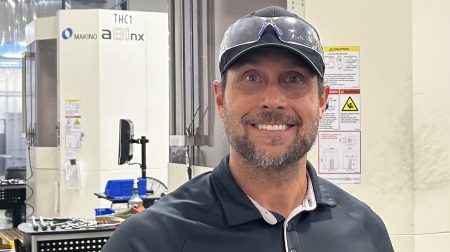
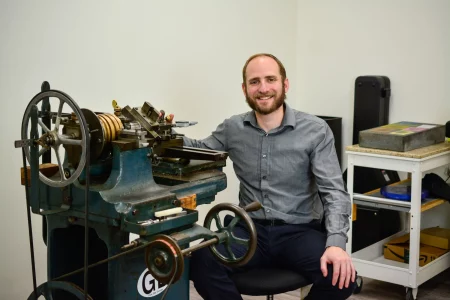
I talked to several young guys—30 is young to me now—who are running things at their shops and feeling good about it. Dave Thuro is pretty much running things now at Thuro Metal products in Long Island N.Y. The company is pushing hard on exporting to Europe and Mexico. Eli Crotzer of Hi-Vol Products, LLC, an automotive cold header turned Hydromat shop in Livonia, Mich., came into the machining world through the private equity door. He says he’s about as technical as a baked potato, but he’s learning fast, selling off one shop in his boss’s portfolio and looking to more ongoing operations.

Aaron Bagshaw of W.H. Bagshaw Co. Inc., carries on the company name after 140 years in the business. He’s adding CNC bargains to his successful line of pins. He was proud of the five Nomuras he just “stole” for $23,000.

Machining is getting a life again right now as the know-nothings write it off.

Creative destruction is alive, under the rubble.

Question: Do you feel the machining business coming back to life?


White Men Can’t Jump

Latest Metal Prices

People of the PMPA Management Update

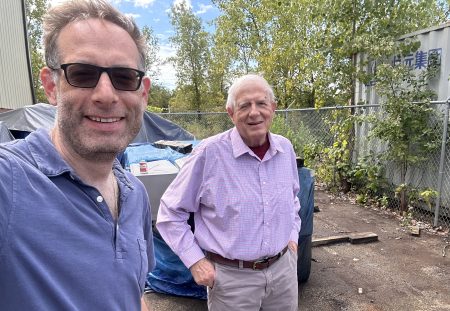
Just a few of the people we caught up with at the Precision Machined Products Association Management Update over the weekend in sunny Scottsdale Arizona.

Albert Thuro of Thuro Metal Products instructed Noah Graff that he needs to find a wife soon or he’ll be relegated to “leftovers.” Romas Juodvalkis of Allways Precision talked about being electrocuted and surviving as a 20-year-old repairman at R.J. Frisby in Chicago. Dan Hankla of Alger Manufacturing, Ontario, California, has an ongoing tug of war with the state’s OSHA equivalent over degreasing processes. Dave Knuepfer of Dupage Machine Parts, who never seems to gain any weight, is finding success hiring local high school kids as interns to get new blood in the shop. Brian Adams of R.F. Mau Co. dropped 35 pounds and showed off his waist looking “maaaavelous.” Jack Steuby of John J. Steuby Co. Screw Machine Products looked himself, and is still trying to make up his mind about making can openers. Say it ain’t so, Jack.

Ron Bracalente of Bracalente Manufacturing Group in Trumbauersville, Penn., is exporting product to China which then goes to Poland. Mark Fordyce of Component Bar Products, O’Fallon, Missouri, talked of competing with Hydromat on spares while being a local supplier. Jeff Ohlemacher of EMC Precision in Elyria, Ohio, told members about having to exert social pressure on Barack Obama to wear safety glasses when the president visited his shop several months ago. Aaron Bagshaw of 140-year-old W.H. Bagshaw Company of Nashua, New Hampshire, was enjoying Phoenix with his wife and two kids. He and his wife are pleased lately about picking up five Nomura Swisses for 23 grand.

Lots of metal guys came but the only machine tool reps were Jim Trunk of Schutte, Jeff Reinert of INDEX, Olaf Tessarzyk of ZPS, and Luca Lanzetta of Pietro Cucchi America.

It was a better turnout than last year in Tampa with 98 companies represented to last year’s 92. It was a serious group. The U.S. vs. Canada gold medal hockey game drained only a few from the presentation of sales guru Jack Daly on Sunday.

Oxygen Education Releases Lean Manufacturing Online Learning Content

New lean content extends Oxygen’s library of ready-to-implement online training content for technical education and workforce development.

Indianapolis, Ind. – February 25, 2010 – Oxygen Education, LLC , a market leading developer of online content for technical education and workforce development, today announced the release of two lean manufacturing online learning content modules. Derived largely from the Toyota Production System (TPS), lean techniques seek to cut costs by eliminating waste from all company processes, provide customers the best value, and increase productivity. New lean content addresses the demand for training in the history and principles of lean techniques and provides the foundation for advanced study of lean manufacturing practices. All Oxygen Education content can be taught totally online or in a blended learning environment as a complement to face-to-face instruction.

Content modules released today are:

Lean Overview & Workplace Organization
This training module provides understanding of the context and vocabulary of lean manufacturing, including:

  • the history and purposes of lean manufacturing
  • the Toyota Production System
  • principles of workplace organization
  • the 5S workplace organization process: Sort, Straighten, Shine, Standardize, Sustain

The module is designed for middle school, high school, and community college students and workforce development participants who require a basic understanding of lean manufacturing principles.

Introduction to Lean

The first content module in a suite of ten lean manufacturing online learning modules provides the foundation for more advanced study of lean manufacturing practices. The Lean Techniques Suite is designed to be implemented as a complete study of lean in postsecondary institutions and workforce development initiatives. In business and industry the Lean Techniques Suite is intended to educate the workforce on lean methods as part of a lean techniques implementation program. The nine additional modules in the suite will provide in-depth study of Lean Theory and the eight tools used to implement lean practices: 5S, Kanban and Pull/Flow, Visual Workplace, Standardized Work, Kaizen, Value Stream Mapping, Setup Reduction (SMED), and Total Production Maintenance.

“Implementing lean practices affords business and industry flexibility to adapt in changing conditions that is especially desirable in an unsure economy,” said David Sandmeyer, director of product development, Oxygen Education. “We anticipate these new training modules will be very popular among educational institutions and workforce development initiatives that are preparing learners for employment as well as in companies that plan to implement lean methods.”

The newly released lean manufacturing content further extends Oxygen Education’s extensive library of online learning content. In addition to Lean Techniques, Oxygen’s Library provides engaging, simulation-based online learning content for technical education and workforce development in Advanced Manufacturing, Alternative Energy, Green Technology, Logistics, and Fundamental/Communication Skills.

Oxygen Education’s interactive content engages students in active learning. The online format allows learners to access learning content 24/7 and enables individuals to move through the content at the pace that’s most comfortable for them. Contact Oxygen Education at sales@o2ed.com, 317-275-5959 for information about implementing Lean Techniques content or any of Oxygen’s engaging, interactive online training content for technical education and workforce development.

Helping and Hatin

By Lloyd Graff

Very interesting action on my blog about Hans Peters looking for a Citizen CNC programmer for his plant in Tennessee. Generally, people in the machining blogosphere wanted to be helpful to a fellow traveler new to machining. But there were the assorted grumps who were offended by the piece because they resented me singling out Peters for special treatment.

I get a perverse charge out of the criticism, especially when it’s nasty. In a world where so many people live life painting by the numbers, it’s sort of refreshing to know that I got some folks to start “hatin” on me about a machining blog. These discerning folks connect with my inner scowl.

How It Works – Cutting Fluids

Today’s Machining World Archive: July 2008, Vol. 4, Issue 07

A cutting oil from Hangsterfer’s Laboratories. (Photo courtesy of Hangsterfer’s Laboratories, Inc..)

Unless you’re doing dry machining, you’ll use some kind of cutting oil or fluid in your machines. Cutting fluids and oils provide lubrication and cooling. They also help remove chips from the cutting area. Selecting from the hundreds of available cutting fluids can be a real challenge. Experts in the business offer some guidelines on selecting and maintaining this important part of the machining process. Usually, you’ll choose either a straight oil or a water-miscible (dilutable) fluid.

Straight oils

These are “mineral oils,” petroleum products made fromcrude oil. Straight oils offer the maximum amount of lubrication, and the least cooling capacity. Blended with additives to improve performance, these oils are often used in screw machines and in heavy cutting operations like broaching and gun drilling.

Vegetable oils can be used instead of, or in addition to, mineral oils in many applications. They tend to have better lubricating qualities, and higher flash point, which is the temperature at which their vapor will ignite. In one cutting oil product line, for example, the flash points range from 200F to over 460F, with the vegetable oils on the higher end.

Water-miscible fluids

In addition to straight oils, three kinds of water-miscible cutting fluids are widely used. They give good tool life and help to produce a good surface finish, said Randy Templin, vice president, Blaser Swisslube, Goshen, N.Y., a manufacturer of cutting oils and fluids. When properly mixed, the fluid is mostly water, with a few percent of the fluid concentrate, which is made up of oil and/or synthetics, plus additives.

  • Soluble oil: This is oil dispersed in water, making a milky-looking mixture. It offers the greatest amount of lubrication among the water-miscible fluids. Emulsifiers and surfactants let the oil mix with the water and remain stable despite contamination from tramp oil, machining fines, and other materials that find their way into machine sumps, Templin said.
  • Synthetics: These don’t contain oil. They are made up of various chemical compounds such as phosphate esters. Synthetics fully dissolve into water. They are often transparent and may look like water or have a colorant added. They tend to be the most stable of the water-miscible fluids, and are often used for applications such as fine grinding, where a fluid is needed to keep the wheel open and clean, according to Templin.
  • Semi-synthetics: These blend oil and synthetics to give a combination of lubrication, stability and cooling performance. The concentrate usually contains 30 percent, or less, of mineral oil, Templin said.

A magnetic filter element showing fines collected from fluid, after conventional filtration. (Photo courtesy of Knoll America)

Finding the right oil or fluid for your application

“We’re trying to change the [industry’s] view,” said Templin, “so people think of coolant or cutting oil as part of the cutting tool package, [something that] can improve the performance of any tool.”

There are so many products available and so many different applications that you will probably depend on your coolant supplier to help you select which fluid to use. Even if you are happy with your current cutting fluid, there may be room for improvement. In many shops, “If tool life is reasonable, they don’t know their coolant [isn’t] optimized,” said Joe Gentile, product manager at Hangsterfer’s Laboratories, Inc., Mantua, N.J.

“The first thing I ask is: what is the primary material that the shop runs? Then, what is the secondary material,” said Gentile. Most shops specialize and don’t realize it, he said. Which machining and other processes is the shop running? Heavy cutting? Grinding?

Gentile also determines what the shop’s tolerance is for residues on parts and machines. “Some shops want the machine to look like you could eat off it; some just want the tool lubricated,” he said. Also, medical and other critical parts shouldn’t accumulate any residue.

Your supplier will likely ask what kind of problems you’re having. Maybe you are not be getting the kind of tool life you expect. Maybe “the current product is going sour, having biostability problems, smoking, misting, leaving residues, or [making operators’] skin break out,” said Mark Goedtel, product manager at Valenite LLC, Madison Heights, Mich., a manufacturer of cutting fluids and tools.

Blasogrind cutting fluid. (Photo courtesy of Blaser Swisslube)

From this and other information, your supplier will select a fluid that meets the needs of your primary application, works effectively with secondary materials and operations, and is compatible with any post-machining processes.

Give it a try

Testing a new coolant is a big commitment. “An insert is easy to put in a machine and test,” said Gentile. “Coolant is a different story.” You have to empty and clean the machine, he said, and you’ll need to be running the same part with both fluids, so you can compare performance.

With a fluid better matched to your process, you stand to gain improved tool life, better surface finish, and reduced cycle times. You may even be able to reduce your per-tool cost, as well. “We’ve helped customers using a $100 drill go to a $20 drill with the same tool life,” Templin said. You can’t always go from carbide tools to high speed steel, he said, but the right cutting fluid in the

Vascomill, a vegetable-based cutting oil from Blaser Swisslube. (Photo courtesy of Blaser Swisslube)

right situation can sometimes make this possible.

Goedtel told about a company that was bar peeling, a very aggressive machining process. However, the shop was using a full-synthetic water-miscible coolant, normally intended for lighter duty. This produced lots of steam and mist. Coolant usage was high – about one drum per day – and tool life was poor. To get acceptable performance with the full-synthetic, the shop was running it at 25 percent concentration instead of the usual 5 percent. Valenite provided a semi-synthetic that added lubrication, improved tool life and reduced misting, steam, and fluid loss.

When you change to a new cutting fluid, it needs be compatible with all of your machining processes, but don’t forget what happens after machining. Verify that your cleaning process works with it, and be sure to alert your plating or paint shop. The new fluid may leave different residues for them to deal with. For medical and other critical applications, alert your customers well in advance of the change, as they may need to obtain regulatory approval.

Mostly water

Since water-miscible fluids are mixed with about 95 percent water, you should have your tap water tested before selecting a new water-miscible fluid. The minerals in hard water can cause a problem with residues, and chemically softened water may tend to cause excessive foaming. Your cutting fluid supplier can advise you, and has different versions of product to alleviate some water-quality problems.

Keeping your cutting fluids on the job

As the price of crude oil goes up, and waste disposal rates rise, the lifetime cost of your cutting fluids goes up, as well. In the past, a shop may have routinely changed out the coolant every year or even every six months; now they’ll try to keep the fluid going as long as possible. This requires careful monitoring and maintenance, but can pay off in the long run.

“The cost of coolant [concentrate might be] $20 per gallon,” said Steven Friedman, president of Sanborn Technologies, Walpole, Mass., a manufacturer of separation equipment for industrial applications. Then you mix water and concentrate in a ratio of 20 to 1. Now, from one gallon of concentrate, you have 20 gallons of waste to dispose of. It may cost you 50 cents per gallon, he said, to have it hauled.

“Cutting fluids are much better today than in the past,” said Friedman. “They last longer and do more of what customers want.” But to keep them going, you need to do some housekeeping – remove solids and tramp oil, and monitor the concentration and pH of the fluid.

To get a feel for the condition of your cutting fluid, filling a small bottle with clean fluid from a machine sump, suggested Bill Cruey, problem solver with Knoll America, Madison Heights, Mich., a supplier of liquid coolant equipment. Let it stand a few days. The solids will settle to the bottom, and the tramp oil may float to the top. Cruey also suggests tying a magnet on a string and leaving it in the sump for a few hours. If you’ve been cutting magnetic materials, the magnet will come out with a fur of tiny metal fragments.

Be particular

Many different kinds of filtration equipment are available for solids removal. Nowadays, it is common to filter out particles down to 30 microns (about 0.001”). However, as shops keep fluid in service longer, smaller particles, “micro fines” accumulate more. They can cause wear on the tool, and clog through-the-tool coolant passages. If you’re running a high-pressure coolant pump, it’s a good idea to filter down to 5 or 10 microns.

Tramp oil

Hydraulic oil and lubricant from the machine ways can end up in the cutting fluid. This can interfere with the fluid’s performance. “Even a couple of percent of tramp oil can make a big difference,” Templin said.

With synthetic water-miscible fluids, often the tramp oil will float to the top when the machine is idle over the weekend, and you can vacuum it up on Monday. A coalescing unit can also remove the tramp oil.

In soluble oil or semi-synthetic coolants, the tramp oil can be more difficult to separate, Friedman said, so you may need something like a centrifuge to do the job. His and other companies can evaluate a sample of your cutting fluid and determine how best to deal with tramp oil and other filtration issues.

Concentration

Water evaporates continually, so you’ll need to monitor the concentration of water-miscible fluids and keep them at their optimum concentration. You can check this yourself with a device called a refractometer, available from your supplier. Some suppliers will analyze samples for you. Goedtel says Valenite performs monthly analysis for customers as part of product support.

pH

Another part of maintenance is monitoring the pH. This is an indicator of the cutting fluid’s “health.” Fluid tends to go acidic when there is a problem. If the pH is out of range, you can run the sump low and add fluid to it, or if the coolant is old, you should probably change it out. In a central cutting fluid system, you might add a pH adjuster.

Microorganisms

Water-miscible cutting fluids offer a friendly environment to bacteria and fungi: warmth, moisture, nutrients. Overgrowth of the wrong microbes can make the fluid smell very bad.

Fluid manufacturers have a number of ways to prevent this. They can formulate the fluid so it provides very little nutrient material, reducing growth of the germs. Or they can add a biocide that kills any microbes present. This could eventually result in the microbes becoming resistant to the biocide.

Another approach is to provide conditions in the cutting fluid that allow friendly, harmless bacteria to thrive, which keep the “bad bugs” from growing out of control, Templin explained. His company’s Blasocut product line uses this method.

Filter, clean and recycle

You can use a movable filtration unit, which wheels up to the machine, such as the portable filtration cart available from Knoll America. This unit incorporates a bag filter and/or a magnetic filter, and can remove particulates down to 5 microns (about 0.00002”). It sells for about $7,500, according to Cruey. This type of unit draws fluid from the machine sump, filters it how it works
and returns it to the sump. Portable tramp oil removers are also available.

To clean the fluid even more thoroughly, you may want to invest in a self-contained recycling unit. These remove tramp oil and thoroughly filter the fluid. Such a unit might cost $100,000, Friedman said. “The important thing is: the fluid is expensive to use and expensive to dispose of, so buying a quality recycling system [can] save money in the long run.”

You need to remove the fluid from the machine, said Friedman, take it somewhere and clean it. At the same time, you can clean the sump. “The right way to do this is on a scheduled basis,” Friedman said, ideally once a month. Vacuum out the coolant from the machine tool sump and take it to your recycling system. Then you can immediately refill the sump with fresh or recycled fluid and start making parts again.

“The metalworking fluid in your facility is the only thing that touches every tool, every part, every person,” said Templin. You handle it. You breathe the mist. It affects every cut and every person who walks in the door, including your customers.

Experts consider the fluid to be as much a part of the machining process as the workpiece and the cutting tool. And the right fluid, properly maintained, can help keep your machines producing high quality parts, economically, with optimum cycle times.

Greg Champion Promoted to Vice President of Sales & Marketing for Goellner, Inc.

Goellner, Inc. in Rockford, IL, announces the promotion of Greg Champion to Vice President of Sales & Marketing. Goellner, Inc. is the holding company for Advanced Machine & Engineering and Hennig, Inc., two leading suppliers to the machine tool, power gen, primary metals and other industries.

Greg has many years of experience with Hennig, Inc, and over twenty years of experience in a variety of management positions in the machine tool and machine tool accessory industries.

In his new role, Greg will oversee all Sales and Marketing activities, which include the strategic direction and management of our worldwide Marketing and Sales initiatives.  He will also be developing new business opportunities, both domestically and globally.

Greg will direct the Sales and Marketing Departments of both Advanced Machine & Engineering and Hennig, Inc. and will work in conjunction with the staff at both locations.

NTMA/PMA ANNOUNCE RE-SHORING INITIATIVE TO BRING U.S. MANUFACTURING JOBS BACK HOME

The National Tooling and Machining Association (NTMA), the Precision Metalforming Association (PMA) and the Association for Manufacturing Technology (AMT) announce the 2010 NTMA/PMA Contract Manufacturing Purchasing Fair: Re-Shoring to Bring U.S. Manufacturing Jobs Back Home. With one stop, OEMs can find competitive U.S. job shops. The Re-Shoring Purchasing Fair will be held on May 12, 2010 at the Hyatt Regency Irvine Hotel, Irvine, CA.
The White House and Congress seem to announce each week a new plan to “Save U.S. jobs, especially manufacturing jobs.” Re-shoring, also called “back-shoring” and “on-shoring,” is a non-protectionist, private sector-driven way to reduce imports (and our trade deficit), increase our “net exports” and create jobs. Re-shoring means bringing lost manufacturing jobs back to the U.S. by uniting large manufacturers with competitive domestic suppliers. Going local can reduce a company’s total costs and offer a host of other benefits, while bringing U.S. manufacturing jobs back home. The NTMA and PMA re-shoring initiative will document to large manufacturers nationwide the benefits of sourcing in the United States. The highlight of the re-shoring campaign is the first-ever “Re-Shoring Fair” which builds on the 50 successful domestically focused Fairs held by NTMA over the last 25 years. It will provide a one-stop for larger U.S. manufacturers (OEMs) to find competitive U.S. job shops to manufacture parts and tooling. More than 50 representatives from large manufacturers are expected to attend and learn about competitive domestic sourcing opportunities from 200 top custom U.S. manufacturers. The Fair is intended to change the sourcing paradigm from “Off-shored is cheaper” to “Local reduces Total Cost of Ownership” and will focus on machined, stamped and fabricated parts, special tooling (dies, molds, jigs, fixtures and gauges) and special machines. Work now being produced domestically is also welcome. The government and media have focused almost exclusively on increasing exports. This initiative, instead, helps U.S. companies take the home field advantage, since they can be much more competitive in the U.S. vs. imports than trying to export to other countries. The move to re-shore production has grown increasingly popular in the U.S. in the face of higher transportation and fuel costs, higher wage rates and reject rates in developing countries. Today, large manufacturers re-shore to:

  • Reduce pipeline and surge inventory impacts on JIT operations;
  • Improve the quality and consistency of inputs;
  • Localize manufacturing operations near R&D facilities, strengthening innovation;
  • Reduce IP and regulatory compliance risk; and
  • Minimize carbon footprint

MOTOMAN PARTNERS WITH DASSAULT SYSTEMES TO DELIVER STATE-OF-THE-ART SIMULATION SOFTWARE FOR THE ACADEMIC MARKET

Dayton, OH – Motoman Inc., a leading industrial robot manufacturer, and Dassault Systèmes, Inc., a worldwide leader in 3D and PLM solutions, have entered into a partnership to market the DELMIA Digital Manufacturing simulation software to colleges and universities in North America.  The DELMIA software suite includes Basic CATIA for 3D modeling, DELMIA V5 for robot simulation, plus three other components for human modeling, PLC validation and NC machining.

“The Dassault suite delivers the five most essential elements for educating today’s engineering students in virtual manufacturing and PLM.  Through this partnership we are pleased to offer DELMIA software preconfigured with Motoman’s family of robots for the academic market,” says Roy Smolky, DELMIA Academic Sales – Americas.

“As a global leader in industrial robotics, Motoman has a long history of providing schools with robots and software for use in their engineering or technology programs.  Adding the DELMIA software allows for a single development environment to be used for the entire CIM cell, not just for the robot.  Educators can now focus on imparting automation concepts rather than on the particulars of a given robot language,” according to Erik Nieves, Technology Director for Motoman Inc.

Nieves adds, “Motoman is especially pleased to have DELMIA V5 support programming and simulation of our seven axis robots.  The SIA family of highly dexterous robot arms is unique, and offers the academy an unprecedented hardware platform for research.  Combining the SIA with Dassault’s software will enable schools to explore new applications while preparing tomorrow’s engineers to be productive upon graduation.”

Swarf: Noah Graff’s Visit to Arve Industries, June 2008

Today’s Machining World Archive: June 2008, Vol. 4, Issue 06

Noah Graff spent the first week

of April in France’s Haute-Savoie region, just across the border from Geneva Switzerland at a press junket held by the Arve-Industries Haute-Savoie Mont-Blanc Competitiveness Pole (Arve-Industries for short). This is his account.

While famous for its ski resorts and mountain lakes, France’s Haute-Savoie region also happens to be a hot bed of screw machine companies; small to medium, privately owned firms whose origins date back to the clock making industry of the Middle Ages. Arve-Industries, named for its location in the Arve Valley, is what’s known in France as a “cluster.” It is an organization formed in 2006, of 183 companies in the region working together on joint R&D projects, to better compete in a relentless world economy. Lionel Baud President of Baud Industries, and Vice President of the Arve-Industries cluster, told me that before the cluster was formed, the small family businesses of the Arve spent little time or resources on R&D and rarely collaborated with one another. The cluster’s members believe their newly formed unity has the potential to bring the region’s companies unprecedented success.

I was the lone American journalist on the trip and the only one in his 20s, and I don’t think the French execs giving us the tours were accustomed to my frank, often sensitive questions. I asked them how French manufacturers could keep up with the rest of the world while tied down by their country’s mandated 35 hour workweek and laws prohibiting the firing of workers. I asked whether they were hiring a lot of workers from Turkey and North Africa to deal with the shortage of skilled labor. I asked why these companies wouldn’t just send all of their operations overseas, or at least 40 minutes across the border into Switzerland where many of these regulatory hurdles would be lifted. When I pushed the question about the difficulty firing workers as companies become leaner and automated one exec from Bosch, the one multi-national company we visited, answered frustrated, “Well, what do you want me to say?” But overall, most people I talked to, although a bit taken aback by my bluntness, really impressed me with their intelligent, honest responses.

The truth is, some companies in the Arve Valley do have plants in Switzerland containing some French employees who commute across the border daily. Switzerland has much lower corporate taxes than EU member states, it’s easier to find workers there, and its workweek is more flexible than that of France. Baud Industries concentrates its watch and medical device manufacturing there, yet Lionel Baud told me he still insists on keeping the most technical, complicated jobs in-house because the cluster is available for assistance and France is where he has the best communication with workers, which creates loyal employees and low turnover.

To deal with the 35 hour workweek, executives said that lights-out manufacturing, automation, and overtime helps keep up productivity. They also said that just because French workers put in less hours does not necessarily mean they can’t match productivity of workers with longer hours if they have superior focus.

As far as my query about firing workers – after a little badgering, the Bosch executive told me to downsize, the company sets up a type of early retirement plan for workers they want to lay-off that meshes with government regulations.

My questions about the employment of workers from the Middle-East and North Africa received the most diverse responses. One company said that 60 percent of its workers come from North Africa and that there are good training schools there producing a lot of quality skilled labor. He added however, that third generation North African immigrants born in France are often not interested in manufacturing jobs, similar to their native French counterparts. One company told me their workforce included 20 percent Turks or North Africans, but as more jobs are requiring advanced skills that number is declining. Another executive said he employs virtually nobody from those regions, but some of his best employees come from Eastern Europe.

Although the companies I visited had diverse business philosophies and strategies, throughout the week I felt a common spirit from my hosts; one of pride, creativity, and a passion to grow while still preserving their roots.

Managing Editor Jill Sevelow

attended the Delcam American Technical Summit, hosted by Methods Machine Tools in Sudbury, Mass., in mid-April. Jill was most impressed by the portfolio of Delcam products. Operations Director Clive Martell said their goal was “to build a series of ‘best in class’ when orchestrating their software CAM acquisitions. Aside from well-known turn/mill and Swiss-type lathe CAM software Partmaker (which Delcam acquired in July of 2006), Delcam includes DentCAD and DentMILL, a dental CAD system for dental machining, PowerMill for 5-axis machining, FeatureCAM, ArtCAM (which Delcam’s Rob Walker likened to “bringing craftsmen into the digital age), and now Crispin-CADCAM software for the shoe industry. In the age of increasingly individualized customization of product, Delcam’s software has evolved with market demand, generating sales of almost $60 million in 2007. Power point presentations laid the groundwork for each product, but customer testimonials drove the “message of excellence” home. Each attributed its growth and acceleration in its respective fields to the collaborative and innovative Delcam product used.

For many years I have been a

staunch advocate of gridlock in Washington politics. The visceral animosity on the national scene began when the Republicans ganged up on the Democratic House Leader Jim Wright, forcing him out of Congress. The Democrats finally got even by banishing Tom DeLay. The legislative process is a Pork Barrel provider presently and not a vehicle to tackle the serious issues of the day.

This might be starting to change. Assuming the presidential race is between John McCain and Barack Obama, a pair of mavericks in their parties who won their nominations as long shot outsiders, we might see each one reaching out to the other party for cabinet members and even vice presidential possibilities.

Some young people are reaching out to both parties to actually address issues that people care about. George Bush wasted eight years in addressing the health insurance problem that affects almost everybody in the United States. The insurance companies and Federal bureaucracy have made such a mess out of health care that we may be near some kind of national compromise if the partisans are circumvented by the people. With some baby boomers retiring soon and a new president, this would be the time.

Another huge Bush failure is immigration policy. He abdicated to the Lou Dobbsians and now the country is losing its transfusion of people energy. Hopefully McCain, who has a grasp of immigration issues from his Arizona experience, or Obama, who is sort of an immigrant himself, will pull us away from the know-nothing cheerleaders in both parties.

On Iraq it may be easier for McCain to extricate a lot of American troops from combat than Barack Hussein Obama, who may have to show the country, the Joint Chiefs and Bin Laden that he is a tough hombre.

I am strangely optimistic about this election and totally undecided about who I’ll vote for. These are two good men to choose from and I haven’t felt that way for a few decades.

On May 8, the state of Israel had

its 60th birthday as an independent country. The country has never been as strong economically as it is now with 20 years of spectacular growth behind it.

Americans can learn a lot from the Israeli experience.

The core strength of the Israeli economy derives from the creativity of a highly educated population. In technical fields, Israel excels. Silicon Valley is filled with Israelis who live in the U.S. and then go back to live in Israel’s Silicon Valley near Tel Aviv.

Israel thinks globally. A myriad of trade deals with other countries have thwarted the Arab economic boycott. After military service almost every secular young Israeli leaves the country for at least a year of travel. This gives the population a worldliness virtually unmatched elsewhere.

Israeli business has abundant access to money through a thriving venture capital network. A host of Israeli tech companies and medical firms have gone public on the Nasdaq stock exchange. Most children in Israel speak at least two languages, Hebrew and English, which is a necessity for global commerce.

The Israeli economy has continued to thrive despite terrorism, six wars, political isolation, and a tiny population with a large segment of parochial Orthodox Jews, many of whom barely work in the modern economy. In many respects, it is an economy functioning with one hand tied behind its back.

The United States can learn from Israel that terrorism can be contained with intelligent determination. We can also learn that immigrants, even poorly educated ones, can bring prosperity if properly acculturated and educated.

Israel has shown that a tiny country, surrounded by fanatical enemies, can thrive if its people have ingenuity, positive energy, intellectual capability, access to capital, a global outlook, and the determination to thrive – no matter what the obstacles.

Noah and I visited Vienna,

Austria recently on a business trip to central Europe. Our first order of business was to find the original Julius Meinl coffee shop, which is my favorite in Chicago.

Our first challenge was to locate the place. Vienna has a big central shopping area, the “zentrum,” with a vast array of shops and restaurants adjacent to the city’s historic buildings. We took the “underground” to the zentrum and asked people for directions to Meinl. Nobody was helpful until we found, of all things, Starbucks. I walked into the old reliable and asked the young barista behind the counter where Meinl could be found. He answered instantly and offered detailed directions in excellent English. He then added that Julius Meinl had recently opened a store in Chicago.

After several missteps, we found Meinl at about 6:00 in the evening on Sunday. The only part of the store which was serving customers was the outdoor seating area. The blond fraulein who came to take our order spoke no English. She was quite pretty but she carried a near scowl on her face. I tried to order a latte, but she only understood cappuccino, so that’s what we ordered.

The coffee came promptly and it was beautifully presented with a heart artfully drawn in the foam. The size of the cup was about one third smaller than the comparable American one and the price was double in American dollars. To the best of my tasting ability, the Viennese and American coffees tasted the same – excellent. But the attitude and the price were decidedly better at Julius Meinl in Chicago.

Jonathan Goodwin dropped out

of seventh grade to help pay the bills and follow his passion for cars and engines. Today the automotive world bows to his genius and wonders if this car nut might actually win the 10 million dollar X PRIZE for producing a low emission, competitively priced, 100 mile per gallon car.

His partner in this venture is Neil Young, rock legend, who contributed his 1960, Lincoln Continental “boat” as Goodwin’s test car.

Goodwin works out of a garage where he specializes in converting Hummers into fuel sipping diesels while boosting their power. He also likes to run his thug cars on fried chicken grease contributed by the local KFC outlet.

The fact that the prestigious X PRIZE contest committee has allowed Goodwin and Young to apply to join the elite, well financed, automotive companies from around the world gives him credibility.

Goodwin is negotiating with DHL to convert 800 vehicles to super efficient systems which cut fuel costs by 50 percent.

It appears that his approach is unique because he does not want to build a new vehicle and engine. His devious plan is to make inexpensive conversion packages for existing vehicles turning them into biodiesel burning plug-in hybrids.

Proving his point on Neil Young’s 40 foot “boat” may not win the X PRIZE, but that’s what they said about the crazy bike mechanics Wilbur and Orville Wright in 1903.