OJT News from NIMS

Great news from the On-The-Job Trainer Program! Nine persons participating in two day workshop at Portland, Maine on January 28-29 earned certifications as NIMS OJT Trainers. The workshop was co- sponsored by the Manufacturing Association of Maine.

The new credential holders represent five Maine companies:

  • Alan Aschoff and Ken Davis of Southern Maine Industries
  • Chuck Bates of General Dynamics ATP
  • Norm MacIntyre of MacIntyre Consulting
  • Joni Amalfitano, Shane Bouchard, Alison Hurlburt, and Wei Zhang of Northeast Laboratory Services
  • Andre Drouin of Mountain Machine Works

During the workshop each participant successfully completed three actual Training Performance Demonstrations, during which they were evaluated with skill checks against the NIMS competencies of Training Methodology, Communication, Coaching and Adult Learning. Each participant successfully passed the NIMS OJT Trainer theory examination, which led to official OJT Trainer Certification.

Congratulations to these nine individuals!

METHODS MACHINE TOOLS NAMES JOCHEN REICHERT AS NEW WESTERN REGIONAL TECHNICAL SALES MANAGER.

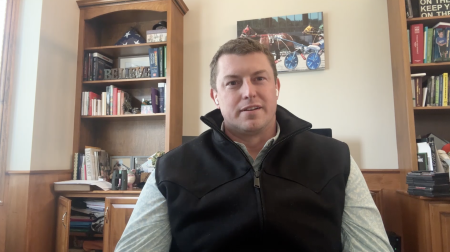
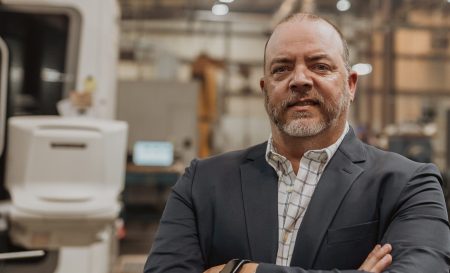
Mr. Jochen Reichert

SUDBURY, MA. U.S.A. (March 1, 2010) – Methods Machine Tools, Inc., a leading supplier of innovative precision machine tools, has selected Mr. Jochen Reichert for the position of Western Regional Technical Sales Manager. He will be covering the United States west of the Mississippi River, Mexico and Costa Rica.

“Jochen brings a unique skill set to Methods,” commented Mr. Dave Lucius, VP of Sales at Methods Machine Tools, Inc.  “Having been an applications manager specializing in Five axis in CNC machining, in addition to owning his own machine shop, he has an in-depth understanding of the manufacturing process for many different applications and can help customers streamline their processes.”

Prior to joining Methods, Mr. Reichert spent eight years as Applications Manager at the North American Headquarters for the German-based 5-axis CNC-operated machine tool builder Hermle Machine Company LLC.  There he managed all applications projects including turnkeys, time studies, test cuts and training.  Mr. Reichert specialized in improving manufacturing processes for a variety of turbo machinery products, including impellers, turbines and blisks.  Before that, Mr. Reichert operated his own machine shop in Alberta, Canada. For seven years, he produced parts for many industries including oil drilling, snowmobile manufacturing, agricultural equipment, the computer industry and more.

How It Works – Broaching

Today’s Machining World Archive: July/August 2009, Vol. 5, Issue 06

Examples of small and large internal broaches (Photo courtesy of American Broach & Machine Co.)

Making accurate and complex cuts easy and economical for high-volume parts

A broach is a cutting tool with many rows of teeth, each slightly larger than its predecessor. They are designed to produce simple or complex forms quickly, usually in one pass, with repeatable and reliable accuracy. As the broach moves past the workpiece (or the workpiece past the broach), each tooth takes a shallow cut along the whole length of the part, carrying the chip to the end of the part, said Dave West, general manager at V-W Broaching Service, Inc., Chicago, Ill., which provides broaching and broach sharpening services and manufactures broaching tools. In many cases, a single pass of the broach completes the machining of the surface. For some workpieces, multiple passes with multiple broaches may be required, depending on the geometry of the part and the amount of stock to be removed.

A typical broach consists of many rows of teeth that do roughing, then a few rows of teeth for semi-finishing and another few rows that finish-machine the surface. The tool design is based on the shape being cut, the properties of the workpiece material and related factors. You can broach internal or external surfaces to almost any shape imaginable, from simple flats and slots to gears to turbine blade hubs for aircraft engines.

Broaching can be quite simple in geometry—cutting a keyway in a gear or other component, for example—or quite complex. Broaching is often used to cut precise diameters or to produce non-round holes in shapes such as a hex, square, or “double D.” You can also use broaching to cut splines, gear teeth and other shapes. West spoke about a surface-broaching job at V-W Broaching that cut 50-plus different dimensions in one pass. “All the dimensions are built into the tool,” he said

A very simple manual broaching job, such as cutting a keyway in a single part, requires only a broach, an arbor press and the appropriate fixturing. Production broaching requires specialized machines and is best for a very large number of parts.

Broaching can reduce the cost of machining certain features to pennies per part. In addition, broaching can sometimes perform cuts that would be impossible to make any other way. In use for more than 100 years, broaching is still widely recognized as the best process for many applications.

Broaching machines come in different configurations; horizontal or vertical, and are designed for internal, external, spiral or surface broaching. In a typical internal broaching machine the part is fixtured and the broach is pulled through it. For broaching outside diameters, typically the broaches are fixtured in the machine and the part is pushed past them. Spiral broaching is often done on a horizontal machine that drives the broach to spiral through an inside diameter and create helical grooves, such as those in a rifle barrel.

Applications

Many materials can be broached. “Almost anything you can cut by machining,”said West, including ferrous and nonferrous metals and even some plastics. V-W Broaching runs dozens of broaching machines, producing parts large and small, for just about any use or industry you can think of—hand tools, appliances, automotive, farm implements, turbines, plumbing, military and many others.

Broaching works best in materials with hardness in the range of 26 to 28 Rockwell C, said Ken Nemec, president of American Broach & Machine Co., Ypsilanti, Mich., manufacturer of broaching machines, broaches and CNC sharpening machines. It is commonly done in the range of 10 to 32 Rockwell C. Chip formation is critical in making good broaching cuts, however, and soft materials

Example of a chip resulting from a broach operation

“are like bubblegum,” Nemec said, but in the ideal range of 26 to 28 Rockwell C, you get clean chips and good tool life. The tool designer needs to take the workpiece material properties into account and needs to run the tool at the appropriate cutting speed to achieve the best results for a given part.

For precision parts that need to be heat treated, such as gears, a part can be broached to near net shape before heat treating. Then a finish broaching operation is performed, removing just a small amount of the hardened material, Nemec said. In this case, the very expensive, specialized machines can cut material as hard as 58 to 60 Rockwell C.

Broach it yourself

The machines and the broaches tend to be quite expensive, but if quantities justify the investment you could bring this capability into your shop. “Most people have sticker shock when they get into broaching,” said Nemec. “It is pretty expensive, especially if you want to get into high production.” You may have a high-volume part on which it costs 20 cents to machine a particular surface that is suitable for broaching. “We can show you how to do it in a lot less time, but you have to invest in capital equipment,” he said. In addition to high-volume machines, American Broach & Machine also offers lower cost broaching machines suitable for shops that want to broach smaller quantities of parts.

If you have a high-volume part or family of parts that look as if they may lend themselves to broaching, the machine manufacturer would start from the print. “First we design a broach for you, then design a machine for the broach,” said Nemec. “We have about 10 different types of broaching machines. We stretch them bigger, and use more or less pressure,” depending on the specific application. Since each machine is different, it is designed and built to order. Delivery can be 26 weeks or longer, he said. Options such as automated parts handling or pressure- monitoring can add capability. “Buying a broaching machine is like buying a car,” Nemec said. There’s a base price and then you add on the options. In his experience, some customers want relatively bare-bones machines. But adding options can save money in the long run—and sometimes, in the not-so-long run.

TLC for tools

An increase in force during a cut indicates that the broach needs sharpening. American Broach & Machine offers a pressure monitoring option that allows you to track the condition of the broach. This capability will add about $16,000 or $17,000 to the cost of the machine, Nemec said, but it can quickly pay for itself. Considering that a broaching tool may cost $2,000, you can easily scrap enough tools in one year to pay for the monitor, he said.

To make good use of the machines you’ll need to understand a few basics of broaching and how to keep your process in order. The machine manufacturer should provide training—just two or three hours with your staff “can save a lot of time, trouble and money,” said Nemec.

An example of a broach part.

Care of broaches, both on and off the machine, is critical to keeping a broaching process profi table. You can run a new $2,000 broach until it fails, get maybe 8,000 parts and then throw it away. Or, you could run 3,000 parts and then sharpen the tool, as many as 20 times, said Nemec. This makes your cost come way down—8,000 parts versus 60,000 parts with the same tool. If sharpening costs $80, this works out to a tooling cost of 25 cents per part versus 6 cents per part.

Off the machine a user must take pains not to damage the cutting edges. Don’t leave broaches lying around on the bench, Nemec said. Store them in wood, plastic or cardboard containers or sleeves, which allow the teeth to dig in but won’t damage them.

Timely and correct sharpening extends tool life and helps keep tooling costs down. You can send tools out to a shop that specializes in sharpening broaches. However, by the time you have three or four broaching machines, you would save a lot of money by sharpening them yourself on a CNC sharpening machine instead, said Nemec. “The guy who is putting that broach in a box could sharpen it.”

Rotary broaching

Rotary broaching is a completely different process. It can cut the same forms as conventional broaching, but you can use it on your screw machine or lathe. A special rotary broaching tool holder mounts on the machine turret, and rotary broaching becomes just another step in your process. This eliminates the need

Internal and external rotary broaching tools, with sample parts.

for secondary operations to form square holes, hex holes, splines or gear teeth, or almost any other internal or external shape you want. Rotary broaching easily works in blind holes, which is not possible with conventional broaching.

A rotary broaching tool has cutting edges the shape of the hole or form you want. It mounts in a toolholder that holds the tool at a 1-degree axial tilt in relation to the center line of the workpiece. Bearings in the toolholder allow the tool to rotate freely. The workpiece is turning, and when the tool comes in contact, it rotates right along with the workpiece. Because of the 1-degree axial tilt, the tool appears to wobble as it rotates. Because of this, rotary broaching is sometimes called “wobble broaching.” It is also known as “Swiss broaching.”

Rotary broaching in action

Before the rotary broaching operation, the workpiece needs to be drilled or turned to the correct diameter for use with the rotary broaching tool. This minimizes the amount of material that the tool will cut. Then, the area where the tool will contact the workpiece is countersunk or chamfered, to allow smooth engagement of the tool. If the chamfer or countersink is not acceptable in the final part, you can design your process to remove it afterward. Then the part is ready for broaching. The following describes internal rotary broaching; external is similar.

As the prepared workpiece is turning, the rotary broaching tool/toolholder advances toward it. Because of the 1-degree axial tilt, only one corner of the tool engages the workpiece at first. When the tool makes contact, the workpiece drives the tool to rotate in unison with it. During rotation, first one corner of the tool contacts the workpiece, then the next, and so on, around and around.

As the tool advances into the workpiece, each corner, in turn, cuts into the metal. This way, bit by bit, the tool cuts a shape that matches the shape of the tool.

How large a form you can rotary broach depends on the material. In aluminum, you can usually rotary broach up to 2”, in steel to 1″. You can rotary broach harder materials, but in smaller sizes. For example, you could broach a quarter-inch hole in Inconel, said Peter Bagwell, engineer at Slater Tools Inc., Clinton Township, Mich.

Toolholders and setup

The technology was developed decades ago, but rotary broaching companies continue to improve tool holders and tools to increase tool life and make the technique easier to use. Because of the precision alignment and offset required, rotary broaching tool holders traditionally required many adjustments and painstaking setup, which could take considerable time, depending on the employee’s experience. A standard rotary broach setup might include six set screws, two bolts with nuts and a sliding plane between the toolholder body and the machine adapter.

Rotary broaching engineers have developed innovations to streamline setup procedures. A specially designed tapered-centering-pin gage can allow you to set

How rotary broaching works. (Illustration provided by Barbara Donahoe & Somma Tool Company, Inc.)

up a fully adjustable tool holder in a minimum of time, said Dick Noti, sales engineer at Somma Tool Company, Inc., Waterbury, Conn. Some toolholders require only an X-axis adjustment, and, in recent years, no-adjustment rotary broaching toolholders for Swiss-type machines have become available.

If you are sending out parts for broaching, or have a job that might take advantage of rotary broaching, contact a rotary broaching tool manufacturer. An application engineer can look at the part and advise you. If you’re not sure you want to make the investment, many suppliers will let you try out a toolholder and broaches on your own machine, without obligation.

Cutting fluids also influence the tool life and part finish, of course. Generally, you should use a good water-soluble oil, Nemec said. In more challenging applications a heavy cutting oil may be needed. Many cutting fluid suppliers offer specially formulated coolants for broaching applications. Your machine manufacturer and tool supplier can recommend appropriate coolants.

With brass parts you’ll want to use a water-soluble oil that won’t discolor the material. You’ll also need a watersoluble fluid with certain thin-walled parts. “Especially for internal [broaching] with thin wall sections, sometimes coolant can make a difference in what your final tolerance is,” said West. “If you broach a round hole [with] a thin wall, it gets hotter than blazes and expands.” In this case, a water-soluble oil will help dissipate the heat.

Whether you broach high-volume parts yourself or send them out for broaching, you can take advantage of the capabilities of this time-honored process: precision, low per-part cost and the ability to cut complex forms with accuracy and repeatability not found with many machining processes.

How It Works – Financing with finesse

Today’s Machining World Archive: August 2008, Vol. 4, Issue 08

Let this year’s tax incentives help pay for your new machines

Maybe you’ve been thinking your shop needs some more equipment. You may have your eye on a multi-function turn/mill machining center that could slash production time on a family of parts. Or you’ve got enough work coming in to justify adding a couple more Swiss-type screw machines. Pricey machines, but you know they could earn their keep.

How to pay for them? Cash? Bank loan? Lease? You’ll find there are quite a few options.

And when should you buy? The answer to that, for many companies is: now. Economic stimulus tax incentives may make 2008 the best time ever for you to acquire the equipment you need.

Now’s the time

If you’re in the United States, you’ve probably heard of the Economic Stimulus Act of 2008 and most likely have received a check intended to increase your personal spending. In addition to sending cash to individuals, Congress included in the program two pretty hefty tax incentives that make major equipment purchases very attractive right now.

The two incentives for equipment purchase allow you to deduct, or “write off,” on your 2008 tax return a much-larger-than- usual portion of the cost of equipment you acquire and put into service this year.

If your company is paying federal income tax at the rate of 35 percent (typical for a corporation), every additional dollar you deduct means 35 cents less you pay in taxes. Increased deductions may also reduce your state and local taxes. If you can use these incentives, your tax savings can, in effect, help pay for the equipment. Here is a very simplified description of the tax incentives.

Bonus depreciation

In calculating your company’s income for tax purposes, you subtract your expenses from your revenue. Many of your expenses, like wages, office supplies, and utility bills, are simply deducted in the year you pay them. When you buy a piece of equipment with a long life, sometimes called “capital equipment,” the tax code requires you to depreciate it – deduct the cost over a period of years.

With the bonus depreciation incentive for the 2008 tax year you can deduct 50 percent of the cost of the machine as bonus depreciation, plus the normal depreciation on the remaining 50 percent of the machine’s cost.

How much can this save you? Calculating depreciation can be complicated and every company’s situation is different, but here is a simple example:

You buy a machine for $600,000 and install it in 2008.

With bonus depreciation, you can deduct 50 percent of the purchase price ($300,000) plus $42,000 (the normal depreciation on the remainder) for a total deduction of $342,000.

Without the bonus depreciation, you could only deduct $84,000 as normal depreciation.

The difference in income tax? $119,700, at the 35-percent tax rate.

Expensing

Section 179 of the tax code allows you to deduct the cost of capital equipment up to a certain amount in the current year, rather than depreciating it. Again, this increases your deductions in the year and reduces your taxes.

For 2008 only, the economic stimulus package increases the section 179 amount to $250,000, double the amount allowed in 2007.

Here is a simplified example of the section 179 deduction:

In 2008 you buy equipment worth $600,000 and place it in service. If you elect to use only the section 179 deduction, you can deduct $250,000 of the cost this year. Then, you depreciate the remainder normally.

Using the section 179 deduction by itself is a good deal. The really good news is that for 2008, you can apply both the section 179 deduction and bonus depreciation.

Combining the incentives

If you bought that $600,000 machine and placed it in service in 2008, you could combine the two types of tax incentives something like this:

You could deduct the first $250,000 of the cost under section 179. You could deduct $175,000 as bonus deprecation, 50 percent of the remaining $350,000.

You could deduct $24,500 as normal first-year depreciation on the remaining $175,000.

So, in this case, you could deduct a total of $449,500 in 2008. The reduction in taxes: $157,325 at the 35 percent rate. For comparison, the deductions for the same purchase in 2007 would have reduced taxes by only $67,025. Your tax savings this year could be almost $90,000 more than usual.

These are simplified examples, and many factors may be different for different situations; your tax advisor can tell you about the value of these incentives to your company.

Fine points

Why would you not take advantage of these incentives?

“The financial implications of the current stimulus package and future tax code changes can be different for different companies,” said Liz Nicolson, government relations director for The Association For Manufacturing Technology, McLean, Va. If your company’s income is too low, you won’t get so much benefit.

If you expect your income to rise significantly in the near future, you may prefer to opt out of bonus deprecation and take normal depreciation, to defer the benefits to years when you have higher income.

Many states use the income from your federal tax return to calculate your state income tax. However, some states do not conform to this and won’t allow the bonus depreciation, said Steven I. Hurok, JD, CPA, Lazar Levine & Felix LLP, New York, N.Y., certified public accountants and business consultants. If yours is a multi-state company, state-to-state differences can create a burden of accounting paperwork that you may prefer to avoid, and opt out of bonus depreciation.

There are many fine points, rules and exclusions within the tax code, and you’ll have to depend on your knowledgeable tax advisor to guide you.

For example, the section 179 deduction phases out, dollar for dollar, if you put in service more than $800,000 worth of depreciable items in 2008; when you hit $1,050,000, the section 179 deduction goes away entirely.

How to finance

OK, so you’ve decided to get more equipment. Unless you’ve got a lot more cash on hand than most companies, you probably won’t be writing a check. So you’ll be looking at taking out a loan or leasing the equipment.

Your preference for loan vs. lease may depend on how much down payment you’re comfortable with, said Darryl Schoen, president of Manufacturers Financing Services, Santa Fe Springs, Cal.

If you borrow the money, the purchase qualifies for the tax incentives. Some leases qualify and some do not. Check with an accountant on this technical point.

Bank loans

Conventional bank loans have financed many a company’s equipment purchases. Your banker will want to know what type of machine you’re buying and how it fits into your manufacturing scheme, said Donald Lonnberg, vice president at Beverly National Bank, Beverly, Mass. You’ll need to show you have enough cash flow to make payments on the loan, and you’ll usually need to make a down payment of 20 percent of the purchase price. Terms at his bank are often five to seven years, depending on the type of equipment, Lonnberg said.

You’ll need to provide financial documents, such as

• Three years of business tax returns, or, if you have them, financial statements prepared by your accountant (profit/loss and cash flow).

• Interim financial statements for the current year.

• Personal financial statements and/or personal tax returns.

• Information about the equipment you’re buying, including a purchase-and-sale agreement, if available.

If your company doesn’t meet the requirements for a conventional loan, Lonnberg suggested investigating loan programs available through the Small Business Administration (SBA).

SBA loans

The 504 loan program offered by the SBA provides funds for purchases and projects in the range of $500,000 to several million, according to Carol Brennan, director of business development at New England Certified Business Development Corp., Wakefield, Mass.

For equipment purchase, the project may consist of multiple machines, Brennan said, and may include used equipment, an option not available for some conventional financing. A 504 loan for equipment features a low, fixed interest rate over ten years, she said.

A 504 loan provides 90 percent funding for an applicable purchase or project: 50 percent from a bank, and 40 percent from a certified development corporation.

When you want to obtain a 504 loan, Brennan recommended approaching your bank and also contacting your local business development corporation (found on the SBA website).

Leasing

Leases are available through finance companies, machine tool manufacturers and other sources.

“Different types of leases have different tax implications,” said Schoen. Some leases qualify for the 2008 tax incentives, others do not. Your particular financial situation will determine what type of lease is most beneficial.

A capital lease, sometimes called a “one-dollar buyout” lease, qualifies for the tax incentives, according to Tammy Sherrill, marketing manager at Intech Funding Corp., Monrovia, Cal. A finance company specializing in industrial equipment. You make payments for the term of the lease, and at the end of the lease, you buy the equipment for one dollar (or a similarly small amount).

Most machine tool manufacturers either provide financing directly, or refer you to a finance company. You may find that a manufacturer’s own customer finance division is extra-motivated to make your loan/leasing experience as easy as possible, in hopes that you will think of them next time you’re in the market.

Other sources

“The financing markets are going through turbulent times, leaving many to wonder what alternatives they have when it comes to financing,” said Brian J. Basil, director, Grant Thornton Corporate Finance, Southfield, Mich. Basil’s company, an investment banking group, advises businesses in buying, selling and capital-raising transactions, matching providers with companies seeking funding.

“We can find sources they wouldn’t think of,” said Basil. If bank financing doesn’t seem to be working out, Basil said, ask your banker to refer you to an investment bank.

Taking the leap and acquiring new (or new-to-you) equipment can be daunting – you have to gauge the return on investment, find funding and cope with “sticker shock” as you look at prices. But this year, at least, the tax incentives can help ease the pain.

As Intech Funding’s Sherrill said, “You can either pay taxes with the money, or buy the machine.”

How It Works – Machining Goes Micro

Today’s Machining World Archive: January 2009, Vol. 5, Issue 01

Cutting a demonstration part on an Atometric G4-ULTRA machining center. (Photo courtesy of Atometric, Inc.)

It’s still cutting metal, but micromachining presents some unique challenges.

Strictly speaking, “micro” machining could be defined as work on the scale of a micron. However, many in the machining business will say that micromachining is making any very small part with very small features.

No matter how you define it, micromachining means small features and tight tolerances.

Micromachined parts can be made from metal or plastic. They’re used in many high-tech applications. For example, in a medical instrument, a tiny micromachined gripper can fit inside a blood vessel and remove a sample of tissue for lab analysis.

“Micromachining is characterized by very small features and tight tolerances,” said Andrew Honegger, vice president, Microlution, Inc., Chicago, Ill. “If you’re making a feature 100 microns, or 0.004″ in size, the tolerance is going to be tight — in single-digits of microns.”

Other very small mechanical systems you’ve probably heard of include MEMS (microelectromechanical systems) and nanotechnology devices. MEMS are typically made up of components in the one-to-100-micron size range, and a MEMS device or system might be up to 1 mm (0.039″) in size. MEMS components are usually made by thin-film operations, such as deposition processes, photolithography and etching, rather than machining. Nanotechnology works in the neighborhood of a nanometer, a billionth of a meter (0.000000039″); some nanotech materials, mechanical devices or features are built up one atom or molecule at a time.

Machines for micro

Though you could cut very small parts on a regular CNC machine, you might have trouble maintaining the necessary tolerances, which may be tens of microns or less. A number of manufacturers produce machining centers specifically designed with the rigidity, and vibration and thermal control needed to meet the dimensional and tolerance requirements of micro or miniature parts. Many of these machines offer capabilities and options that tailor them to micromachining applications: Tool changing, tool-tip measurement and offset, optional high-speed spindles, different coolant methods, pallets and built-in measurement systems.

Demonstration piece made on an Atometric G4-ULTRA machining center. For scale, part of a key is shown. (Photo courtesy of Atometric, Inc.)

Demonstration piece made on an Atometric G4-ULTRA machining center. For scale, part of a key is shown. (Photo courtesy of Atometric, Inc.)

Atometric, Inc., Rockford, Ill., offers the G4-ULTRA, a general-purpose horizontal machining center that can be configured for 3-, 4-, or 5-axis operation. It machines within a work space 100 mm (4 inches) on a side. The machine positions to within a fraction of a micron, and the tool tip is positioned to within a micron. The G4-ULTRA comes with a 100,000 RPM servo spindle as standard equipment and a 200,000 RPM spindle is available. The machine provides automatic tool-changing from a 14-position holder. It places the tools directly into the spindle collet to minimize runout, rather than use tool holders. Conductive probing through the tool is available, and this capability can be used for broken tool sensing, as well. An optional confocal laser measuring system can measure conductive or nonconductive workpieces on the machine.

Microlution, Inc., Chicago, Ill., produces a 363-S horizontal 3-axis milling machine, suitable for parts up to two inches on a side that require tools 1/8″ diameter or less, said Honegger. A 50,000 RPM spindle is standard, and options include 80,000 and 160,000 RPM spindles. The 363-S also has a 36-pocket automatic tool changer. Positioning is within two microns, and repeatability is within 0.2 microns. The unit’s standard software uses G- and M-codes; Microlution can also create custom software for specialized applications. For example, one customer requested to have a camera integrated into the unit for measuring fixtures and parts.

Kern Precision, Inc., Webster, Mass., offers three models of 5-axis-capable machining centers for micromachining. The entry-level Micro system has a 10″ x 8.5″ x 8″ workspace. It provides one-micron positioning accuracy, and +_ 2.5 microns achievable part accuracy. The Kern Evo’s work space is 12″ x 11″ x 10″; it has a fully integrated pallet system and a tool changer expandable from 32 up to 95 tools. The Kern Evo provides 500 nm (nanometer) positioning accuracy and +_ 2 microns achievable part accuracy. The highest precision unit, the Pyramid Nano, has a work envelope of 20″ x 20″ x 16″, and provides 300 nm positioning and an achievable part accuracy of +_ 1 micron. The Micro and Evo models are available with spindles up to 160,000 RPM, and the Pyramid Nano up to 50,000 RPM.

Electrical discharge machining (EDM) has its own micromachines. SmalTec, Lisle, Ill., produces two micro EDM units. The EM203 and GM703 provide three dimensional machining, similar to that done by a CNC machine, but where a very small spark does the material removal. In addition, these units can also machine with conventional cutting tools. The EM203 has a positioning range of 200 mm x 200 mm x 95 mm (7.8″ x 7.8″ x 3.7″), and provides machining accuracy of 1 micron on 10 mm, and 5 microns on 100 mm. The GM703 has a positioning range of 50 mm x 50 mm x 65 mm (2″ x 2″ x 2.6″), and provides machining accuracy of 30 m on 10 mm, and 170 nm on 50 mm.

Tools the diameter of a human hair

“We often use 100-micron or four-thousandths-diameter tools,” said Lindem, president at Atometric, Inc. That’s about the diameter of a human hair. It’s a challenge making a new part without breaking tools, he said, but then a tool will cut for hours.

Tools 1/16″ or 1/32″ in diameter, or less, can be considered “micro” tools, said Robert Savage, president of Magafor Precision Cutting Tools, Turners Falls, Mass. His company offers end mills from 0.002″ diameter in 0.002″ increments, and reamers from 0.008″ diameter. A corner-rounding tool is also available for radii of 0.004″ and up. To minimize the number of tools required, Magafor offers an eight-function Multi-V tool from 0.020″ diameter, which drills, v-grooves, chamfers and performs other operations with a single tool. All the micro tools have 3 mm (1/8″) diameter shanks. Hex broaches for cutting driver heads are available 0.051″ across the flats and larger, from Hassay-Savage, Magafor’s parent company.

RobbJack Corporation, Lincoln, Cal., offers end mills and other tools starting at 0.005″ diameter in one-thousandth increments, said Mike MacArthur, applications engineer at RobbJack. If you need an intermediate size, the company can hand-select for diameter down to the nearest 0.0002″.

For prototypes and short runs of parts, Atometric uses uncoated carbide tools. Two years ago, coated tools under 0.025″ in diameter weren’t commercially available, Lindem said. Now, he says, they’re available down to 0.010″. In production the coated tools run faster and longer, he said.

For certain specific applications, such as precision small diameters in graphite, or thin fi ns and ribs in plastic injection molds, a diamond coating may be called for, such as the CVD (chemical vapor deposition) diamond coating available from Crystallume, Santa Clara, Cal., a division of RobbJack.

Though you can’t see the geometries of a tool’s cutting edge without a microscope, they’re still important. “People complain about quality and consistency,” said MacArthur. “One common thing I see in the marketplace is small diameter tools that don’t have any ground primary relief angles.” The correct angles and ground relief are important for quality of the cut, he said.

SmalTec micro EDM equipment even allows you to make your own cutting tools. You can call up a special tool-making program and shape the tool in a section of the machine devoted to tool making, using a horizontal wire. “We can shape tools to any angle or diameter or features,” said Jerry Mraz, SmalTec’s general manager.

Making parts

“Every consideration you have — in fixturing, in coolant, in cutting a part — all the same considerations are in micromachining,” said Lindem, “but you have to be prepared that everything acts differently.” You’ll be able to apply all your knowledge, but often in new ways, he said.

“Traditional feeds and speeds go right out the door” when you’re cutting with a very small tool, said Gary Zurek, president/CEO, Kern Precision, Inc., Webster, Mass. “Go to the manufacturer of the cutters and use data from them as a starting point.”

“You can run a day’s production and have a cup of chips at the end of the day,” said Lindem. The chips “look like fairy dust, but under a microscope they look like perfectly formed chips from a big machine.” Those tiny chips pose a problem normally not encountered in larger-scale machining. Lindem told of a situation where he would normally use a synthetic coolant. However, he needed to filter the coolant down to the one-micron level to remove those chips. Some of the lubricity components of the synthetic coolant were in the one-to-five micron size range, he said, so they were filtered out, too.

“Use simpler coolant, misted coolants and oils,” said Lindem. “If you’re using a tiny tool and putting a lot of heat in a small area, you get coolant effect with misting coolant.” Also, be aware, he said, that if you’re running an end mill a couple of thousandths in diameter, if you put a stream of coolant on it, you could break it.

Work holding can be a challenge for micro parts, which may be very delicate. “Sometimes we have the drawing and it looks solid,” said Lindem. But maybe the raw material is “15-thousandths wire, and it may not have much structural integrity. Not like a cast iron engine block.” Try using small versions of standard chucks, vacuum chucks or magnetic chucks. Magnets may work. The manufacturer of your machine can help come up with work holding schemes for challenging workpieces.

Measurement of these small parts can be tricky. They’re hard to handle, they need to be fixtured, they may be fragile, and, of course, the tolerances are very, very tight. Many machining centers have contact, conductive or optical probing capability, so you can cut and measure the part without having to handle it. For measurement off the machining center, an optical coordinate measuring machine (CMM) might be a good investment if you’re moving into the micromachining business.

Machining on the micro scale can widen your market in growing industries where the parts are getting smaller, such as medical devices. What it takes is the right equipment and a willingness to learn a new way of working.

New Bone Screws Could Make it Hard For CNC Swiss Guys

From left, screws made of polylactic acid, hydroxylapatite, and medical stainless steel. (Credit: Fraunhofer IFAM)

By Noah Graff

Great news for people with broken legs, but perhaps terrible news for the guys manufacturing titanium and stainless steel bone screws on CNC Swiss.

According to an article this week on CNET.com, “This month, researchers at the Fraunhofer Institute for Manufacturing Engineering and Applied Materials Research (IFAM) in Bremen, Germany, are unveiling a new type of screw that not only biodegrades within two years but actually encourages bone growth into the implant itself so as not to leave gaping holes where the screws used to be. (This has been one goal of fracture putty as well.)”

This could mean no more need to remove screws after bones have healed fractures nor having to leave inorganic foreign metal objects in our bodies. The precious medical manufacturing sector would be turned upside down.

IFAM researchers developed a moldable composite made of polylactic acid and hydroxylapatite, a ceramic that Philipp Imgrund of IFAM’s biomaterial technology department says is the main constituent of bone material.

Because the screws are made by injection molding, post processes such as milling won’t be necessary.

Could be a good time to get into the molding business.

Source: CNET News

Machining for the Stars

March 2010
Download PDF

Machining for the Stars

2009 MTV Music AwardsPhoto courtesy of Tait Towers

Michael Tait threads his pinky through a loop of fabric on the side of a piece of the stage for Bon Jovi’s “The Circle World Tour.” It’s one of more than 40,000 moving parts that Tait’s company, Tait Towers, has designed and predominantly manufactured for the massive tour stage.

“You think this looks simple, but roadies come in and tell us that this should be up three inches or to the right a bit. We’ve got to be precise, got to get it right,” said Tait, a former roadie and lighting director himself back in the early 1970s for the
band Yes. “We have some of the world’s most demanding customers and they can’t bear to have things screwed up.”

Tait Towers is the premier builder of sets for rock tours and elaborate casino and set shows. It’s a fun business, Tait admits, but it would be nowhere without his sophisticated machine shop filled with CNC machines. His designers and machine operators play the computer keyboards like Rachmaninoff at the piano and most often come up with staging as mellifluous and intricate as any of the great composer’s concertos.

When it isn’t Bon Jovi counting on Tait’s headquarters way out in Pennsylvania’s Dutch country it’s Bruce Springsteen, for whom Tait developed a now-ubiquitous click-and-lock, thus nut-and-boltless connecting system for decking and modular parts.

“This is a business that relies on getting from place to place, mostly on a daily basis,” said Tait. “The easier we can make it to take apart and put together these sets, the more valuable we are. And I have to say that CNC has made our growth, production and our advances really possible.”

Tait studied engineering at the Royal Melbourne Institute of Technology in his native Australia before wandering off to England, entranced by the rock scene. The Clair brothers, owners of a leading audio, video and lighting/design firm, invited him to sleep on their couch when he wanted to devise what was then an elaborate set for Yes. It was circular and cut in pie-shaped pieces so the band could play in the round and, thus, have a bigger audience encircling them.

“But we did it with saws and rulers and whatever passed as modern in the 1970s,” laughed Tait, leaning on his Haas CNC lathe, one of a dozen CNC machines the company uses in its four-building campus. “When one part didn’t fit because it was too wide or not straight enough, we sanded it and did it again.”

“It’s almost laughable now that we have minute tolerances from the CNCs, but you did with what you had back then. Now you can do just amazing stuff without worries,” said Tait.

Aluminum Extrusion Inventory Racks. Photos courtesy of Tait Towers

Teaming up with the Clair brothers, Tait built up his rock staging reputation and soon, like the better mousetrap maker, everyone started beating a path to his remote door in Lititz—ironic because also headquartered in Lititz is Woodstream, the makers of the Victor
mousetrap, the largest-selling trap in the world.

“With Woodstream, our businesses and Wilbur Chocolates and others, we have an amazing workforce here,” said Tait, who employs about 120 workers, almost all hailing from the Lititz/Lancaster area.

One of them is Jared Keim, who at 25 is Tait Towers’ machine shop manager. Keim was an avowed motorhead in high school and didn’t think he would ever go to an academic college. Instead, he headed to Thaddeus Stevens, a local technical school, and discovered that
working with computers and machines was his thing.

“I really didn’t know that Tait was this rock business. It was just a job where

CNC Mill for machining aluminum staging members. Photos courtesy of Tait Towers

I could use the CNC training I got,” said Keim, talking while squeezing a box on his computer that would display a part for the stage of Lady Gaga’s tour. He showed off a coffin lock, perhaps the most integral part of any rock stage, he said. It comes apart like those Russian dolls-within-dolls, a set of three larger pieces, each containing several smaller metallic and plastic parts. The coffin locks bind together the larger slab parts of the staging—which for Tait usually measure four by eight feet. The coffin locks have both springs to make sure the staging has a little give for the always-bouncing rock stars and, on the outside, a plastic sheathing that keeps it tight as well. Tait laughs and says that in the rock world, that piece is called a “fluffer.” “That’s what they call the woman in porn movies who, well, keeps things rigid,” he said.

It’s CNC technology, said Tait, that keeps things going at Tait Towers, which he said is set to be a $50 million business in 2010.

“When I bought my first Komo 15 years ago people thought I was nuts,” he said. What was the purpose of that? How was I going to make enough use of it?

“In the end, though, rock bands wanted more and more bells and whistles. With those CNCs, we were able to make whatever parts we could design,” he said.

Take the Bon Jovi tour set, for instance. Bon Jovi wanted innovative video as part of his tours. Tait Towers came up with a sort of Venetian blind effect, with doublesided video screens that open and close, expanding from 10-by-10-feet to 10-by-30 feet. When they are closed, crowds see full video 360 degrees around. When they separate, the crowd sees Bon Jovi live.

“As you may imagine, there has to be precise tolerance for all of that,” said Tait. “It is used many times and has to be packed away carefully to go to the next stop. You just couldn’t do that before CNC. We discovered that first, so we got the reputation and the business.”

Back in his Yes days it was a big deal to have two trucks to cart sets around. Now, Tait said, it is not unusual to have 20 trucks carrying a set from a Friday night show in Seattle to a Saturday show in Portland, or wherever. He estimated that the Bon Jovi set Tait is currently working on would need 23 trucks. For the last U2 tour, the group’s elaborate set had to go by plane to its opening show in Barcelona—a cost of $300,000 just to start.

“We are not cheap, at least up front,” said Tait, who would not reveal any particular charges but noted that seven-figure design and
construction costs were the norm. “What we save them in road workers and break-down and put-together costs are immense later on.”

Aluminum components for the Bon Jovi show. Photos courtesy of Tait Towers

Tait moves his hand along a piece of staging from Metallica’s last tour. The ends are rounded, the connecting parts smooth and with precise tongue-and-groove fits, no bolts are seen. With shipping and tight corners in trucks, he said, jagged corners are intolerable. There are no jigsaws or power drills in rock-roadie hands any more.

“We machine everything as smooth as we can,” he said. In her 2006 tour, Barbara Streisand wanted to come down a long staircase with sparkling railings along the side. Naturally, those railings had to come in pieces, but Streisand was going to slide her hands down them. “Each piece had to fit seamlessly together. Imagine Streisand gasping after she caught her hand on some edge, or if she even looked unsteady. Our machines were able to make it seemless, and have it be taken apart and put back together just as precisely at each stop.” Tait repeated that seamless railing for the Michael Jackson show that never happened because of the singer’s death. It’s not only older singers who need such joints on long, cylindrical items—as is apparent in Britney Spears’ pole-dancing sets or Lady Gaga’s almost-maniacal acts.

Down the road a bit from Tait’s unobtrusive building in the middle of a small industrial park is Tait’s new warehouse. It stores lots of old sets and items that rock groups either don’t want any more or couldn’t store anyway. In a way, it is a sort of rock museum. There are
the spray-foam guns that Tait designed for the Jonas Brothers, Britney Spears’ mainstage decks, Elton John’s piano deck and Springsteen’s video walkway. Each piece still has its sign and coding along the facing, so it could be snapped together again if another date came up—Metallica, the Eagles, Radio City, celebrating the stages of life.

“You could say this is just another boring machine shop, because in some ways it is what anyone would do—have an order and get it done,” he said. “But then these orders are from some of the great artists of our time who know what they want—or at least have cocktail
napkins that say what they want.”

Tait said that his company has thrived, ironically, because the recording business has dived.

“They have to make their money on tours, and thus they want everything newer and newer, but want to know it won’t fail them,” he said. “Our reputation as a machine shop is important. We’re not just pie-in-the-sky, but people who can talk to their tech guys and assure them that it will all go together and come apart, so all [the artists] have to do is play the music and dance.”

Actually, said Tait, few if any musicians come to Lititz. The rock tour business is larger—the design and tech employees outnumber the musicians these days, and that is who Tait deals with. He had lunch with Bette Midler in downtown Lititz once, but he said no one even asked for her autograph.

“The people out here are respectful of your business, and they keep to theirs,” he said. Tait recalls a story that his sound-company friend, Roy Clair, told him about the day Billy Joel came to Clair Brothers to do a little testing.

“He was on the main street in the back of a car and was a bit lost,” said Tait. “He rolled down the window and asked someone where Clair Brothers was. The person said, ‘Oh, I can’t tell you that. They like to be private.’

“This is why I am in Lititz,” said Tait with another Australian chuckle. “Billy Joel, be damned. We are a good machine shop.”

March Madness Swarf

By Lloyd Graff

Tattoos on NBA players irritate me. Lebron James has 17 body tattoos that have been identified. Though it is suspected that he has others which have not appeared in photos.

I see the proliferation of body hieroglyphics as a reflection of the “look at me I’m a star” braggadocio that sullies the slam dunk league. I am an old school basketball purist who revels in team play and a flawless fast-break. I love a Steve Nash or a Chris Paul because they can score and dish and improvise the game into Brubeck jazz.

I ask myself if my annoyance with tattoos is latent racism, generational divide, or just hoops snobbery. It probably has some of all three elements. Though I see a Chris Anderson as the ultimate narcissist, a mediocre white player displaying himself like a spooked peacock.

Anybody who follows my writing knows that I am a sports enthusiast. Basketball has been a love since I watched Bob Cousy make no-look behind the back passes to Bill Russell for the Boston Celtics. I think Lebron is the most talented basketball player I’ve ever watched, but watching him take over a game with one on one play in the fourth quarter is as annoying as looking at his tattoos.

Question: Do you feel that body ink is symptomatic of a thuggified cult of personality NBA or am I a hopelessly out of touch Frank Sinatra white guy in a Lil Wayne’s world?


Chris Andersen & his tattoos

GibbsCAM 2010 to be Demonstrated at WESTEC 2010

Includes New Plunge Roughing, Additions to 5-axis and Advanced 3D Machining, Plus 64-bit Implementation

MOORPARK, CA – March 1, 2010 – Gibbs and Associates, developer of GibbsCAM® software for maximizing programming efficiency of CNC machine tools and a Cimatron company, announced today that it will be demonstrating GibbsCAM 2010 during the WESTEC 2010 show at the Los Angeles Convention Center in Los Angeles, California from March 23-25, 2010 in booth #2236.  This new release includes multiple new features, additions, enhancements, and productivity tools.  

“We have been working very hard to provide customers new functionality across the GibbsCAM product family,” says Bill Gibbs, founder and president of Gibbs and Associates. “We added many capabilities to make programming and machining easier and more efficient, especially with new features in 5-axis and solids machining. We also implemented 64-bit operation to enable faster processing of long programs and complex parts, added support for new tools and tool holders, extended functionality within various modules, and extended and updated interoperability with various CAD systems,” he adds. “All this is in addition to the recent integration of VoluMillTM and making GibbsCAM compatible with the Windows® 7 operating system.”


Key GibbsCAM 5-axis Enhancements

These include more spiral machining options, new gouge check projection options, a new lead in/lead out “flip” option, a new axial shift damp option for trimming applications, and support for countersink and keyway cutters. More specific additions are the following.

Geometry Creation – A Surface Tools plug-in has been added to create surfaces for repairing or improving machinability of surfaces from solids.

Adaptive Cuts – This new option enables regulating the distance between paths based upon the angle of the surface to be machined to provide a consistent surface finish, regardless of surface angle.

Impeller Roughing – Has been enhanced with functionality that covers more contingencies, especially useful when roughing near and around splitter blades.

Tool Retraction – A new option, Retract Through Tube Center, enables retracting cutting tools from angled pockets while avoiding walls, especially useful for machining cylinder head ports and similar geometry.

Key Enhancements to Solids Machining

New, More Capable Plunge Roughing – No longer a plug-in, it is a tile in the CAM palette, with the ability to calculate material removal strategies that accommodate carbide-inserted drills, which require special motion for no-drag retractions, while avoiding collision in tight or narrow areas.

Enhancements to Advanced 3D Machining – These include the addition of Hit Flats with specified tools for Pocketing, the ability to specify flatness tolerance in Flats Cut to ensure all desired “flat” areas are machined, locking high feed rate for Shortest Route and Minimal Vertical retract styles, addition of Trim to Ramp Advance as a Contour option for waterline cuts, specifying surface finish with step-over distance or scallop height parameters, and using Stock Bounding Box as an additional machining boundary.

Addition of Option for Stock – Facet bodies, generated from a previous machining process, or brought in through a data file, can now be used as initial stock in solid pocketing.

64-bit Implementation

A significant development, the 64-bit implementation allows taking advantage of the more powerful, multi-processor PCs equipped with 4GB or more of RAM. This provides tighter interoperability with 64-bit CAD systems that are co-resident with GibbsCAM on a PC. Also, 64-bit operation reduces computation time when processing extremely long programs or working with complex geometry. It will also enable users to take advantage of system enhancements when running under the Windows 7 operating system.

Even More Enhancements

GibbsCAM 2010 includes many more features, some for ease of use, and others to extend functionality, including enhancements to the user interface and for the Milling, MTM (multi-task machining) and Wire EDM modules, as well as new add-ins for data exchange to support Inventor 2010, SolidWorks 2010, and additional CAD file import and translation. Furthermore, the Macros menu was enhanced with changes for easy access, uninterrupted operation, and support for 5-axis and Advanced 3D processes and calls to plug-ins.

For more information about GibbsCAM, or to locate your local GibbsCAM reseller, go to www.GibbsCAM.com, call 1-800-654-9399, or email info@GibbsCAM.com.

GibbsCAM 2010